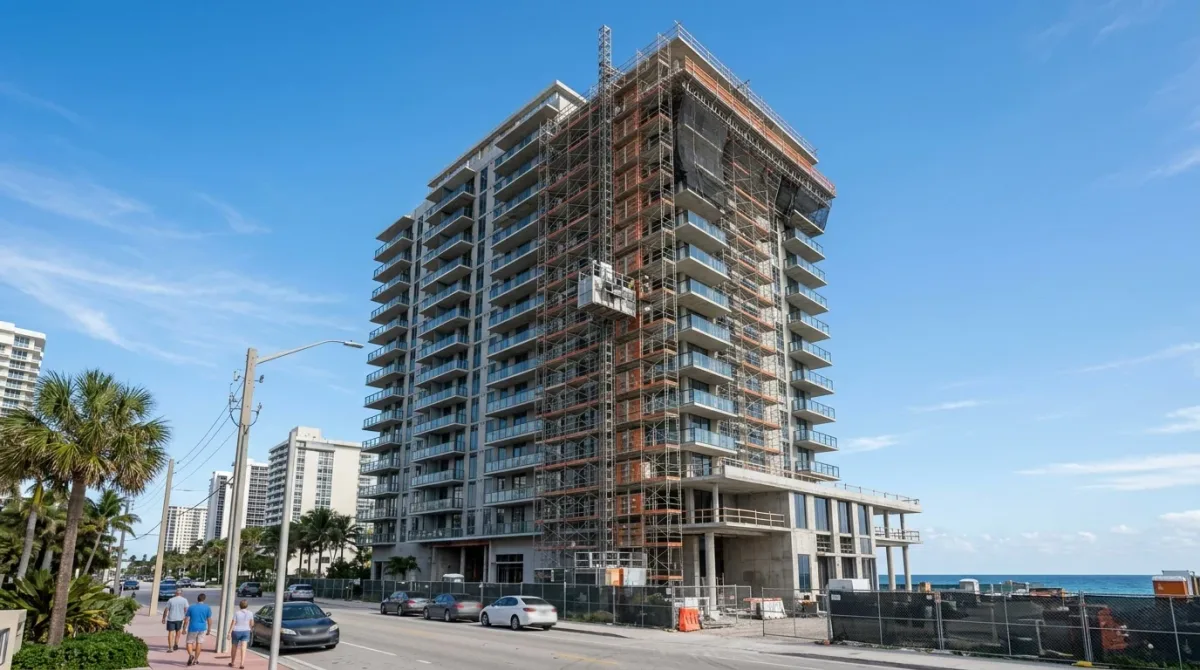
If you're buying or already own a Miami-Dade condo in a building three stories or taller, two state deadlines determine what you'll pay next: a milestone structural inspection and a structural integrity reserve study, both tied to when your building was built and how close it sits to the coast, under Florida Statute 553.899 as of August 20, 2026.
Why do these rules exist in the first place?
Both requirements trace back to the June 2021 collapse of Champlain Towers South in Surfside, which killed 98 people, according to CBS News Miami's reporting on the resulting condo legislation (March 27, 2025). Florida lawmakers responded with the 2022 and 2023 laws that created the milestone inspection and reserve study requirements now in effect statewide, per CBS News Miami. For Miami-Dade in particular, that means older coastal towers — a large share of the county's condo inventory — are the buildings most likely to be on a tight compliance clock.
What is a milestone inspection, and does my building need one?
A milestone inspection is a state-mandated structural review for any condominium or cooperative building three stories or higher. Single-family, two-family or three-family dwellings of three or fewer habitable stories are exempt, under Florida Statute 553.899 (as of August 20, 2026). A licensed architect or engineer does a "Phase One" visual review of the structure. If that review turns up substantial structural deterioration, the building moves to "Phase Two," which can include destructive or non-destructive testing to confirm it's still safe to occupy.
When is the deadline for my building?
Timing depends on age and distance from the water, per Florida Statute 553.899 (as of August 20, 2026). Buildings that already had a certificate of occupancy on or before July 1, 1992 were required to complete their first inspection by December 31, 2024 — a deadline that has already passed for most of Miami's older stock. Buildings that missed that window remain out of compliance until they inspect.
| Building type | First inspection due | Repeat cycle |
|---|---|---|
| Inland (more than 3 miles from the coast) | By Dec. 31 of the year the building turns 30 | Every 10 years |
| Coastal (within 3 miles of the coastline) | By Dec. 31 of the year the building turns 25 | Every 10 years |
| Occupied on or before July 1, 1992 (either category) | Initial inspection was due Dec. 31, 2024 | Every 10 years after that |
Source: Florida Statute 553.899, as of August 20, 2026.
What's a Structural Integrity Reserve Study, and how is it different from a milestone inspection?
A Structural Integrity Reserve Study (SIRS) is a separate requirement that looks at how much money your association has saved for future repairs, not just the building's current condition. It applies to the same buildings — three habitable stories or higher — under Florida Statute 718.112 (as of August 20, 2026). Associations that existed before July 1, 2022 and are controlled by unit owners had to complete their first SIRS by December 31, 2025. If your building's milestone inspection happens by December 31, 2026, the SIRS can be done at the same time, but no later than that date.
The study has to cover the roof, load-bearing walls, fireproofing and fire protection, plumbing, electrical systems, waterproofing and exterior painting, windows and exterior doors, and any other item with a replacement cost over $25,000 that affects structural integrity, per Florida Statute 718.112 (as of August 20, 2026). It repeats at least every 10 years.
Why are Miami condo owners getting hit with large special assessments?
Once a SIRS is done, the law limits what your association can do with the numbers it produces. For any budget adopted on or after December 31, 2024, a unit-owner-controlled association covered by the SIRS requirement can no longer vote to waive or underfund reserves for the components the study identifies, according to Florida Statute 718.112 (as of August 20, 2026). That fully-funded mandate is a major reason boards that spent years collecting minimal reserves are now billing owners directly. One South Florida condo resident described paying "$6,900 for this roof" as an example of the fees the compliance rush has triggered, CBS News Miami reported March 27, 2025.
What changed for 2026 — is relief coming?
State lawmakers have been working on ways to soften the financial hit without loosening the safety rules. A Senate measure discussed as of March 27, 2025 would let associations pause and reduce reserve funding for up to two years after a milestone report, permit boards to invest reserve funds, and create a statewide database of buildings subject to inspection, according to Senate Regulated Industries Chairwoman Jennifer Bradley, as reported by CBS News Miami. Separately, State Sen. Rosalind Osgood has pushed for installment payment options so owners can spread large assessments over time instead of paying in a lump sum, and for rules that distinguish high-rise coastal buildings from smaller inland condos, CBS News Miami reported. As of this writing, check with your association or the Florida Division of Condominiums for the current status of any relief measure before assuming it applies to your building.
What should you check before buying a Miami-Dade condo?
Ask the association for its most recent milestone inspection report and SIRS, and for the reserve fund balance measured against what the SIRS says is required, since a fully-funded mandate applies to budgets adopted on or after December 31, 2024 under Florida Statute 718.112 (as of August 20, 2026). Ask when the building's certificate of occupancy was issued — that date determines which inspection deadline applies under Florida Statute 553.899 (as of August 20, 2026). And ask directly whether a special assessment has been approved or is under board discussion, since assessments tied to milestone and SIRS findings are the mechanism driving the large bills owners have reported.
Also ask for the building's certificate-of-occupancy date in writing rather than relying on a listing description, and request the last two years of board meeting minutes, since assessment votes and reserve-funding decisions typically surface there before they reach unit owners as a bill. A seller or listing agent's account of a building's inspection status is an attributed claim from an interested party, not independent verification — the milestone report and SIRS themselves are the documents that matter.
Frequently asked questions
Do all Miami condos need a milestone inspection?
Only buildings three habitable stories or higher; smaller single-family, two-family, or three-family dwellings of three or fewer stories are exempt, per Florida Statute 553.899 (as of August 20, 2026).
What happens if a building fails Phase One of its milestone inspection?
It moves to Phase Two, where the inspector can order destructive or non-destructive testing to fully assess the areas of concern and confirm whether the building remains safe to occupy, under Florida Statute 553.899 (as of August 20, 2026).
Can an association still vote to underfund its reserves?
Not for a budget adopted on or after December 31, 2024, if the association is unit-owner-controlled and subject to the SIRS requirement — members may not vote for no reserves or reduced reserves for the components the study covers, according to Florida Statute 718.112 (as of August 20, 2026).
Is help available for owners facing a big assessment?
Legislative proposals discussed as of March 27, 2025 — including installment payment options and a temporary reserve-funding pause — were still moving through the process; owners should confirm current law with their association or the state before counting on relief, per CBS News Miami.
For a related miami news perspective, read What Miami-Dade's condo recertification and reserve rules mean for what you'll pay to own.
For more context, read What $2,500 a month rents in Miami right now.