A workday lunch under $20 in Brickell is realistic as of March 2026, but only in specific formats: food-hall stalls, Cuban and Latin counters, lunch specials, and grocery hot bars. The neighborhood's sit-down rooms generally start their entrees in the high $20s, so the sub-$20 game is about choosing counters over dining rooms and skipping the drinks line. Typical builds land at $12 to $19 with tax.
Brickell is the most expensive dining corridor in Miami on an average-check basis, which is why the under-$20 question comes up constantly from office workers and visitors alike. This guide prices the realistic formats, shows the arithmetic of a full bill — tax and tip included — and marks the traps that turn a $16 plate into a $26 one. All figures are estimated ranges, subject to change.
What lunch formats actually stay under $20 in Brickell?
Four formats reliably do it, and each has a ceiling you should know.
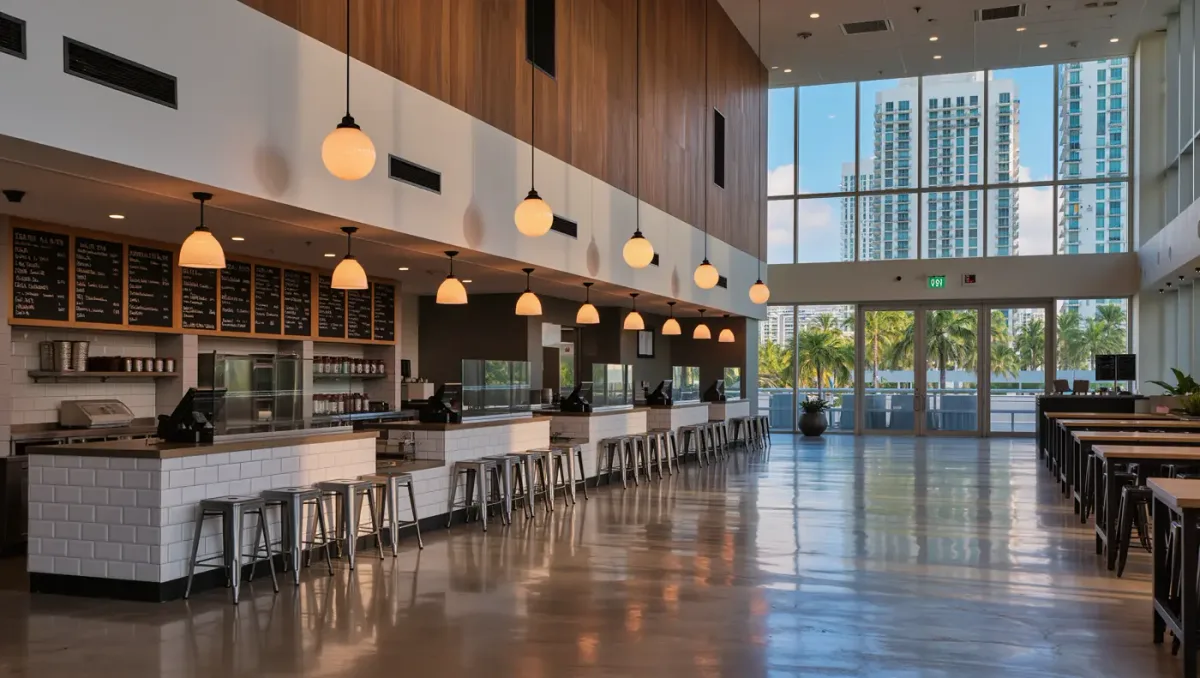
- Food-hall stalls. Brickell's food halls concentrate a dozen counters in one room, with plates from roughly $10 to $16 — bowls, arepas, sandwiches, poke, roti. One item plus a water stays comfortably under $20; adding a fountain drink usually still works.
- Cuban and Latin counters. A pressed sandwich or a plate with rice and beans runs about $9 to $15. The most filling format on this list, and the fastest.
- Lunch specials and prix fixe boards. Several sit-down rooms post weekday lunch specials — a defined entree, sometimes with a starter — at $16 to $20. Read the board before sitting; the special menu is the only menu in the room that fits this budget.
- Grocery and pharmacy hot bars. By weight, typically $9 to $13 a pound, with a filled container landing at $8 to $14. The desk-lunch option, and the only one with a guaranteed price before you order.
How does the $20 break down once tax and tip are added?
This is where Brickell budgets fail. Counter formats involve no service charge and modest tips; dining-room formats involve both. The arithmetic on a $16 base order looks like this.
| Format | Base order | Tax (about 8%) | Tip | All-in |
|---|---|---|---|---|
| Food-hall stall | $14 | $1.12 | $0–$2 (jar) | $15–$17 |
| Cuban counter | $12 | $0.96 | $1–$2 | $14–$15 |
| Lunch special, sit-down | $17 | $1.36 | $3–$3.50 (18–20%) | $21–$22 |
| Grocery hot bar | $11 | $0.88 | none | $12 |
Read the table honestly: the sit-down lunch special with tip usually breaches $20, which is fine if you know it going in. The counter formats clear the bar with room to spare, and they are where your recurring weekly budget should live if the $20 line is firm.
What should you skip to stay under $20?
- Beverages beyond water. A $5 fresh juice or $6 coffee adds 30 percent to the meal. Counter coffee under $3 is the exception.
- Automatic service charges. A few counter-adjacent cafes add 3 to 5 percent fees; check the register screen before tapping your card.
- Downtown-adjacent parking. A garage hour can cost as much as lunch. If you drive in, validate at the venue or take Metromover, which is free on its downtown loop.
- Delivery apps. Fees and markups routinely push the same $14 counter order past $24. Walk the two blocks.
Is the food-hall lunch actually good value?
Evaluatively: yes on price per quantity, mixed on consistency. Food-hall stalls charge close to neighborhood-counter prices — unusual for a premier business district — and you get variety when a group cannot agree on one cuisine. The trade-offs are seating at peak noon hours and per-stall quality that varies more than a fixed kitchen's. A practical rhythm for Brickell regulars: food hall two or three days a week, Cuban counter once, grocery hot bar on heavy-work days, and save the sit-down lunch specials for client meals where the tip overage buys a table.
How much does a month of Brickell lunches cost?
Scale the numbers to a work month of about 20 lunches. At the realistic counter average of $15 all-in, you spend about $300 a month eating every lunch in Brickell. Mix in four grocery hot-bar days at $12 and the month drops to roughly $285; eating sit-down specials four times at $22 pushes it past $310. Compare that to the delivery-app version of the same month — easily $450 to $500 — and the format choices in this guide are worth about $150 a month, which is real money against a Brickell rent.
What do Brickell office workers actually order?
Walk the food halls at noon and the orders repeat: a rice bowl at one stall, an arepa combo at another, half a rotisserie chicken with plantains split between two coworkers, a poke bowl heavy on rice. The pattern is protein-plus-starch from a counter you can see the kitchen of, ordered within a 15-minute window before the 12:30 queue forms. Regulars time their lunch at 11:45 or after 1:30 — same food, shorter lines, and some stalls discount trays near closing in the late afternoon.
Does a $20 Brickell lunch exist on weekends?
More easily than on weekdays, because the office crowd disappears. Weekend hours at counter formats continue, lines shrink, and the parking pressure drops, which removes the fee that most often breaks the budget for drivers. The trade-off is that some lunch specials run Monday to Friday only, and a handful of stalls in office-oriented halls close entirely on Sundays. Check hours before a weekend trip; the Cuban counters are the most reliable seven-day option in the neighborhood.
When do Brickell prices drop below the counter level?
Twice, predictably. Happy hour — typically 4 to 7 p.m. on weekdays at many bars — prices snacks at $5 to $10, and an early plate plus a soft drink can beat the lunch spread, though it only helps if your schedule allows a late meal. And weekend brunch boards occasionally undercut weekday checks at the same kitchens, though Brickell brunch skews expensive on drinks. The steady play remains the weekday counter lunch; the variable play is timing your break one hour later and eating off the happy-hour board.