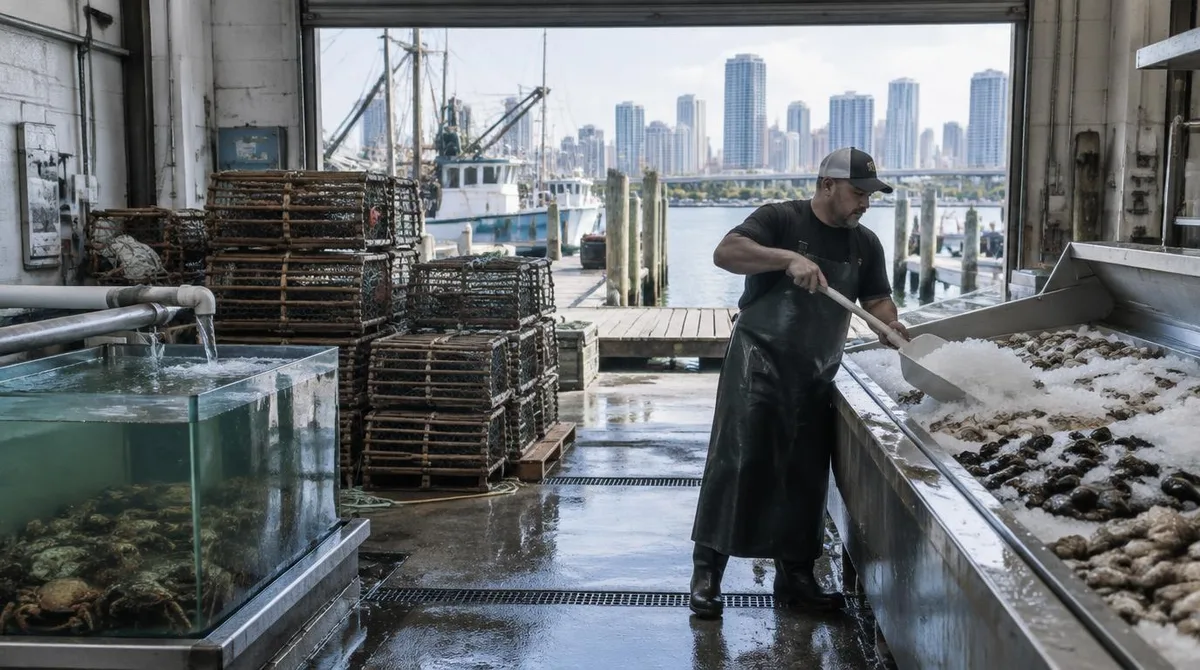
If you chase the best seafood Miami has to offer, start where the boats unload. Working vessels tie up along the Miami River, and the same fish that lands on a riverfront plate also reaches a market case, often the same morning. Most of those cases hide behind plain storefronts a few blocks from the postcards.
You do not need a boat or a license to eat this well. Two family operations sell off their own fleets on the river, and the state sets the calendar for Florida's prize catch. Stone crab season runs Oct. 15 through May 1 in state waters, per the Florida Fish and Wildlife Conservation Commission, as checked in October 2026.
What a Miami fish market actually sells
The same fish the dining room next door serves, before anyone cooks it. Casablanca Fish Market works out of 404 NW North River Drive and describes itself as a restaurant and seafood market selling crab and shellfish off its own boats, per its own site as captured by the Internet Archive in August 2025.
Garcia's is the other name locals trade. Its menu says the house stone crabs come in daily from the family's own fishing fleet while the season lasts, and the same page prints prices for sandwiches and chowders. Both counters sell to walk-ins as well as diners. For related coverage, see How Miami Spice actually works in 2026: dates, prices, and what's included.
When stone crab season runs, and what the rules allow
The FWC sets the harvest at Oct. 15 to May 1 in state waters, per its stone crab page as checked in October 2026. A taken claw must measure at least 2 7/8 inches, and only claws may be kept, because the live crab goes back to grow another. Recreational harvest is capped at 1 gallon of claws per person, or 2 gallons per vessel, whichever is less.
Out of season, claws on ice are frozen or imported, and prices climb. If claws are the point, plan the trip between mid-October and April.
What you will pay
Garcia's posted menu, checked October 2026, lists a Mahi-Mahi sandwich at $16 and a grouper sandwich at $20, chowder at $6 a cup, and fresh oysters at $18 for half a dozen. Stone crabs break the pattern: every size is sold at market price, because dock prices move with the daily catch. Printed numbers are subject to change.
Casablanca's site does not post prices, so call the market at 305-371-4107 if the budget decides the menu. Whole fish is usually the cheapest way to buy, and the counter will clean it for you on request. Bring a cooler in warm months; the drive home is short, but Florida does the rest.
How to plan a market run
Casablanca lists hours as Monday through Friday from 10 a.m. to 5 p.m. and weekends from 9 a.m. to 5 p.m., per its site snapshot from August 2025. Hours are subject to change, so call before you drive. Mornings give you the fullest case; by late afternoon, the best of the day has usually walked out the door.
- Check the season first: claws bought out of season are freezer stock.
- Ask what landed that morning, and buy that.
- Whole fish should look bright-eyed and smell like clean seawater, not like a harbor.
- On claws, match size to budget; bigger means sweeter, smaller means cheaper.
How to cook the catch at home
Keep it simple, because good fish does not need much help.
- Whole fish: salt the skin, pan-fry in oil, and stop when the flesh turns opaque.
- Clams and mussels: steam with garlic until the shells open; throw out any that stay shut.
- Stone crab claws: sold cooked, so crack them, chill them, and serve with mustard sauce.
Cook the day you buy. Dockside fish does not owe you a week in the fridge, and the flavor gap between day one and day three is the whole reason to shop this way.
Conclusion: the case, not the freezer aisle
Miami's dock-to-plate trade runs on two habits: buy in season, and buy what came in today. The riverfront markets make both easy, with Garcia's fleet feeding its own cases and Casablanca's door open six days a week. Prices follow the dock, the calendar follows the FWC, and dinner follows a short drive home. If supermarket fillets have been your default, this is the shortest upgrade your grocery run will ever get. This connects to our earlier piece, Miami fish markets: buying seafood and cooking it at home for less.