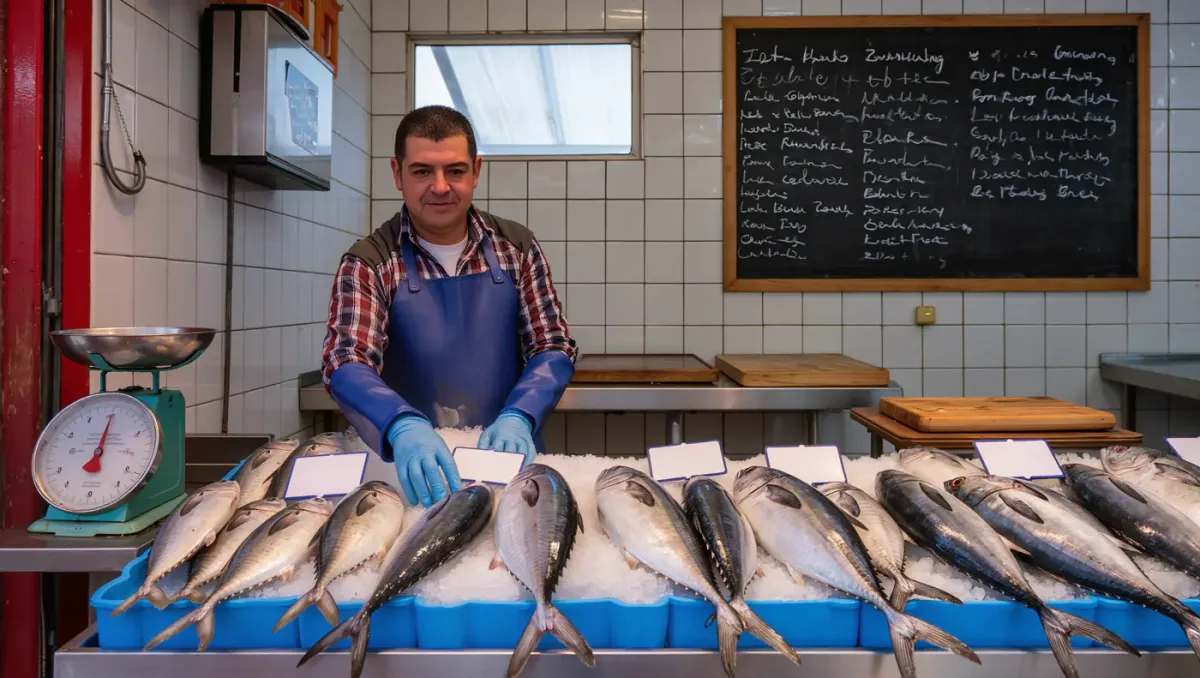
Cooking Miami seafood at home cuts the cost of a fish dinner roughly in half. As of March 2026, whole yellowtail snapper and mahi runs about $10 to $16 a pound at local fish markets, farmed shrimp $10 to $14, and a simple home plate lands near $9 to $14 a serving — versus $28 to $45 for the same fish as a restaurant entree. The savings survive even after oil, rice, and plantains.
Miami buys more seafood per household than most American cities, and the market infrastructure matches it: dedicated fish markets, Latin seafood counters, and waterfront retail operations across the county. This guide covers where the counters cluster, what to pay per species, how to judge freshness, and the honest math of cooking versus eating out. Prices are typical ranges, subject to change.
What kinds of fish markets does Miami have?
Three types cover the county, each with its own pricing logic.
- Dedicated fish markets. Counter-first operations in Latin neighborhoods and along the working waterfront, selling whole and filleted fish on ice, usually the freshest and cheapest option. Strongest concentrations in Hialeah, Little Havana, West Kendall, and the industrial blocks off the rivers.
- Latin supermarket seafood counters. Full-service groceries with real fish counters — reasonable prices, convenient hours, and one-stop shopping for the rest of the plate. Quality varies by store and by delivery day.
- Waterfront and dockside retail. Markets attached to working docks and marinas, selling the local catch directly. Fun to visit, occasionally excellent on the day's catch, and not reliably cheaper than neighborhood counters.
What should Miami seafood cost per pound?
| Item | Typical price per pound | Notes |
|---|---|---|
| Yellowtail snapper, whole | $10–$14 | The local value fish; grilled whole |
| Mahi, fillet | $13–$18 | Widely available year-round |
| Grouper, fillet | $18–$28 | Priciest local favorite |
| Farmed shrimp, shell-on | $10–$14 | Frozen-thawed is fine |
| Stone crab claws, in season | $30–$50+ | Season runs Oct 15–May 1; a treat, not a staple |
Prices above are typical retail ranges as of early 2026 and move with landings and season. The value logic: whole yellowtail is the cheapest way to eat local fish, and a fishmonger will scale and gut it free; filleting fees, where charged, usually run a few dollars per fish.
How much cheaper is cooking fish at home in Miami?
Run one plate end to end. A half-pound of yellowtail snapper fillet yield from a $12 whole fish costs about $6 in fish; add $1.50 of rice, $1 of plantains or salad, and perhaps $1 of oil, lime, and garlic. The plate lands near $9 to $10. The same fish at a casual Miami restaurant is a $26 to $34 entree before tax and tip, and at an upscale room, $38 to $45. Even generously counting your energy and time, home cooking runs less than half the restaurant cost — and the gap widens on shrimp, where restaurants mark up the most forgiving protein in the case.
How do you judge freshness at a fish counter?
Four checks cover it, and none requires expertise. First, smell: clean seawater, never a strong fish odor — a sharp smell at a market counter is a walk-away signal. Second, eyes on whole fish: clear and plump, not gray or sunken. Third, flesh: springy to a light press, with fillets looking moist and translucent, not milky at the edges. Fourth, ice: the fish should sit on, or in, fresh ice rather than in a dry tray. Ask what came in that morning and buy from that answer; at honest counters the staff answer without hesitation, and the busiest market in a neighborhood is usually busy for a reason.
What is in season for South Florida seafood?
Timing shifts spending more than any coupon. Stone crab season runs October 15 to May 1, with prices highest at the season's start. Commercial amberjack and several snapper species peak in the warmer months; mahi runs strongest in spring and early summer. Spanish mackerel is a cool-season value in late fall and winter, often under $8 a pound. Hurricane-season disruptions in late summer can briefly tighten supply and raise prices on local species — a good reason to keep frozen fillets in the freezer from spring purchases.
What else should you buy at a Latin seafood counter?
The counters double as ingredient shops, and the extras cost little while changing the plate. Ceviche-grade staples — limes, red onion, cilantro, sour oranges — run a few dollars total and cover a week of marinades. Frozen empanada shells from the same freezer case turn leftover cooked fish into dinner in ten minutes. Many counters sell prepared items too: aguachile and ceviche by the pound at $12 to $18, fish stock, and whole fried fish cooked to order at some Hialeah and Little Havana markets, which lands at a middle price point between raw fish and a restaurant. Buying the protein raw and the flavor base at the same counter is the real market habit.
How should you store and cook a Miami fish-market haul?
- Same-day or freeze. Refrigerated fish keeps well for one to two days on ice in the coldest part of the fridge; beyond that, freeze it. Wrap fillets tightly or vacuum-seal; freeze whole cleaned fish flat in bags.
- Thaw slow. Overnight in the refrigerator, never on the counter. Shrimp thaw in under an hour under cold running water.
- Simplest cooking wins. Whole snapper: salt, lime, a hot grill or a 400-degree oven for roughly 10 minutes per inch of thickness. Shrimp: two to three minutes per side in garlic oil; overcooking is the only common failure.
- Season like the counters do. Sour orange, garlic, oregano, and cumin — the mojo profile — covers nearly every local white fish.
For safe handling, the federal food-safety agency publishes straightforward guidance on selecting and storing seafood, from checking for freshness to keeping cold chains intact between the market and your refrigerator.
What is the realistic first shopping list?
Start small: one whole yellowtail, a pound of shell-on shrimp, limes, sour orange, garlic, and a bag of rice. That haul feeds two people twice, costs roughly $30 to $38 at neighborhood-counter prices as of early 2026, and uses one pan and a grill or oven. If the first plate works, add grouper as the splurge and mackerel as the winter value — the freezer and the mojo marinade do the rest.