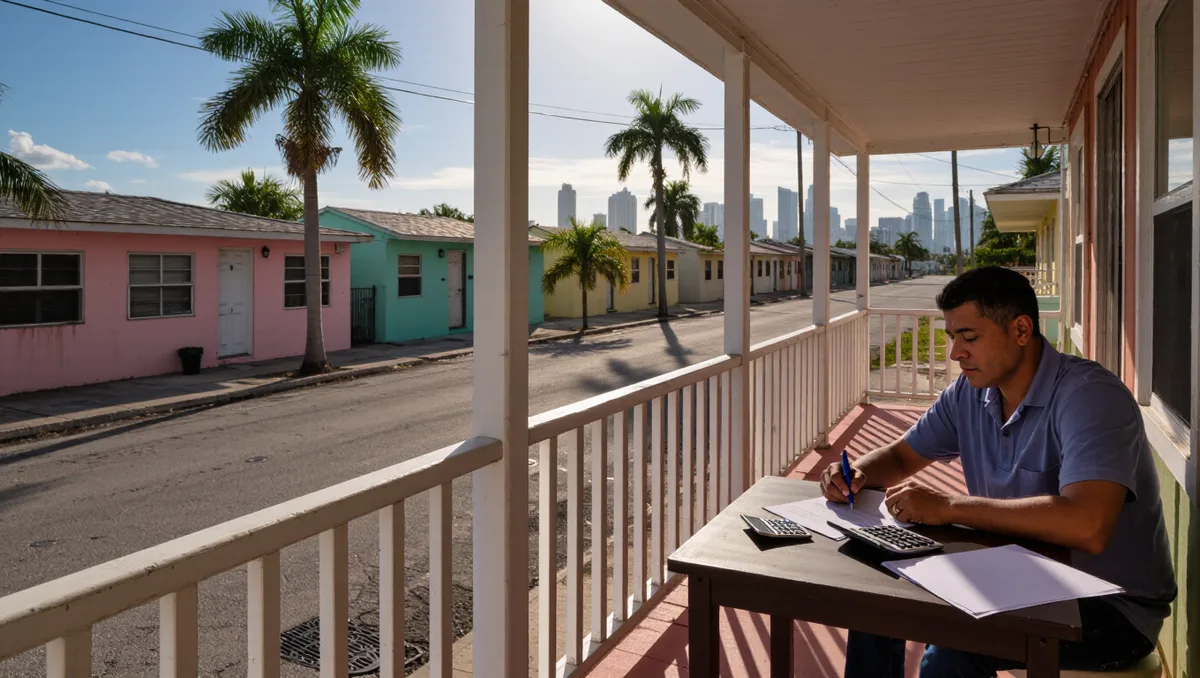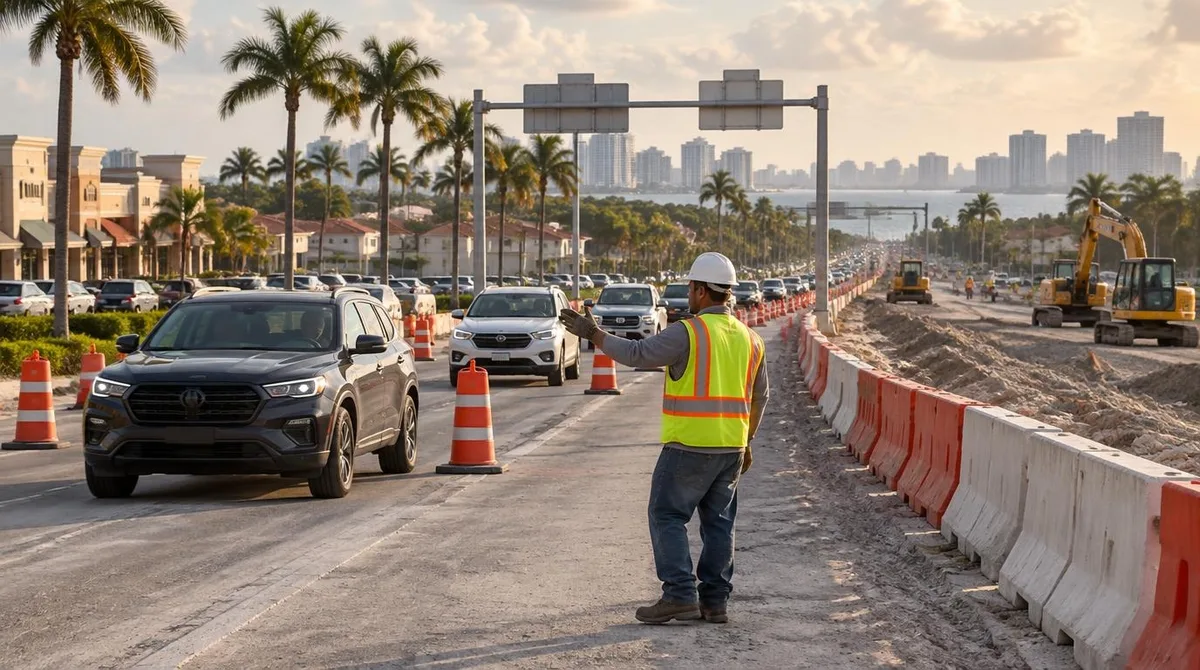
Drive down any stretch of US-1 or I-75 and you can see the question before you can answer it: new rooftops, new strip malls, new lanes under construction. Florida is still one of the fastest-growing big states in the country. But the boom is not what it was five years ago, and the difference matters if you're moving to Florida, renting here, or just sitting in traffic.
Here's the short version. Florida counts more than 23 million residents and ranks third in population among the states, according to Wikipedia's Florida entry, which lists a 2025 population of 23,462,518. Growth has continued, but the furious pandemic-era surge has cooled, and some newcomers have already turned around and left. The result is a state that still feels crowded — but one where the pressure points have shifted from buying frenzy to everyday strain: housing supply, insurance bills, and road capacity.
How big is Florida's population now?
Florida passed the 23 million mark in the mid-2020s and has kept climbing. The 2024 estimate stood at 23,372,215, per OnTheWorldMap's Florida state profile, and the 2025 figure reached roughly 23.4 million. That puts Florida behind only California and Texas.
The growth is uneven. The Miami metropolitan area — Miami, Fort Lauderdale and West Palm Beach — remains the state's largest, with about 6.1 million people. But the biggest single city is Jacksonville, and fast-growing cities like Port St. Lucie and Cape Coral sit far from Miami's core. Growth spreads along the coasts and the I-4 corridor, not evenly across 67 counties. We covered a connected angle in Florida is still growing, but the moving van era is slowing: what new census data shows.
Is the boom slowing down?
Yes, at the margin. Few states had a bigger pandemic-era population jump than Florida, according to Simple English Wikipedia's summary, which notes that many who moved during that stretch later decided Florida was not for them, citing high inflation and the state's politics among their reasons. That's a real signal: the state still grows, but net inflows are smaller than they were at the peak.
What this means for a newcomer is straightforward. The competition for housing is less desperate than it was in 2021 and 2022, but the state's baseline demand — retirees, international migrants, job-driven domestic moves — has not gone away. Anyone expecting the wide-open market of a shrinking state will be disappointed.
What does growth do to housing costs?
More people, same land, same zoning rules: prices and rents rise until builders catch up or demand cools. Florida's recent history has run through both phases. The pandemic surge pushed asking prices up sharply. The cooling since then has left homes sitting longer even as sales continue — a market that's loosening at the edges, not collapsing. Readers following this should also see Florida's housing market at mid-2026: sales climb, homes still sit longer.
Our analysis of the numbers in front of us: the state's median household income, listed at $77,700 for 2024 in the Wikipedia summary, sits mid-pack nationally while home prices in many metros sit near the top. That gap is the whole housing story. It's why rent growth has cooled in much of the state while Miami holds firmer, and why affordability — not availability — is now the complaint you hear most. For a deeper dive, our mid-2026 housing market read and our population-growth report walk through the latest data.
What does growth mean for roads, schools and water?
Population shows up in infrastructure before it shows up in headlines. A few thousand new households in a suburb mean a school needs another wing, a road needs another lane, and a utility needs another well or plant. Florida's flat, low-lying geography makes this harder than it sounds: much of the densely populated south sits below 12 feet of elevation, per World Atlas's Florida maps and facts page, which also notes the state rests on limestone that supplies drinking water through the Floridan Aquifer. Growth has to fit on ground that floods and over an aquifer that everyone shares.
Schools feel the lag most visibly. Enrollment growth follows family moves by a year or two, so districts in fast-growing counties play catch-up with portable classrooms and bond referendums. Roads are slower still — a highway widening can take a decade from planning to ribbon-cutting, which is why the traffic you sit in today reflects decisions made when the population was several million smaller.
Who is actually moving to Florida?
The mix has always been layered, and it still is:
- Retirees, drawn by warm winters and the absence of a state income tax on wages and retirement income.
- Domestic job-seekers, following employers and remote-work flexibility to Tampa, Orlando and Miami.
- International migrants, long anchored by communities from Cuba, Haiti, Colombia, Mexico and Jamaica, as the Simple English Wikipedia entry notes for recent immigrant origins.
- Seasonal residents, who don't count in the census but count heavily in traffic, restaurant receipts and January grocery lines.
That last group matters more than most people realize. Snowbirds inflate demand for housing and services part of the year without appearing in any growth number, which is one reason lived experience here can feel more crowded than the statistics suggest.
What this means if you're considering a move
Growth numbers are context, not a verdict. The useful takeaways from the data in front of us:
- The state is still adding people, but the frantic pace of the pandemic years has eased. Less competition, not no competition.
- Affordability is the binding constraint. Income has not kept pace with housing costs in the biggest metros, so the practical math favors inland and northern markets over coastal cores.
- Insurance and property taxes, not just the purchase price, shape the real cost of living here — both have been in flux. Our coverage of the property tax debate and the insurance market in 2026 tracks where those bills stand.
- Infrastructure lags growth by design. Check commute times and school capacity for a specific address, not the metro average.
What the evidence establishes is a state that remains a magnet, with a slower pulse. What remains unknown is whether the cooling is a pause or a plateau — that question won't be settled until a few more years of migration data land.