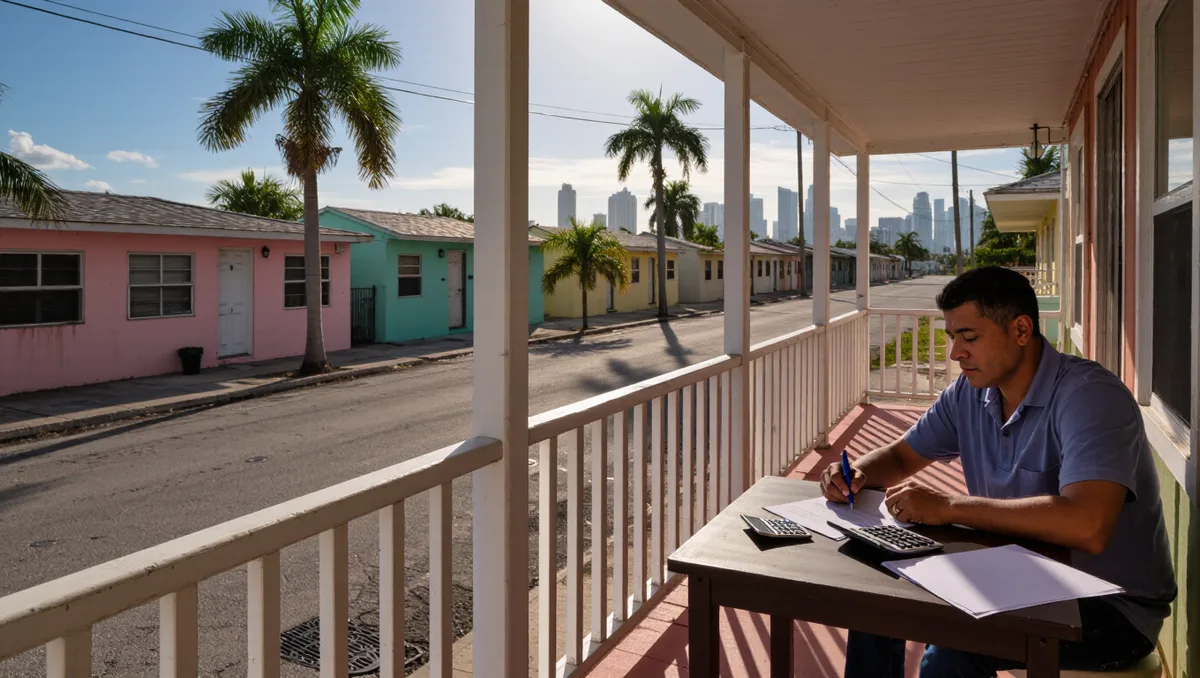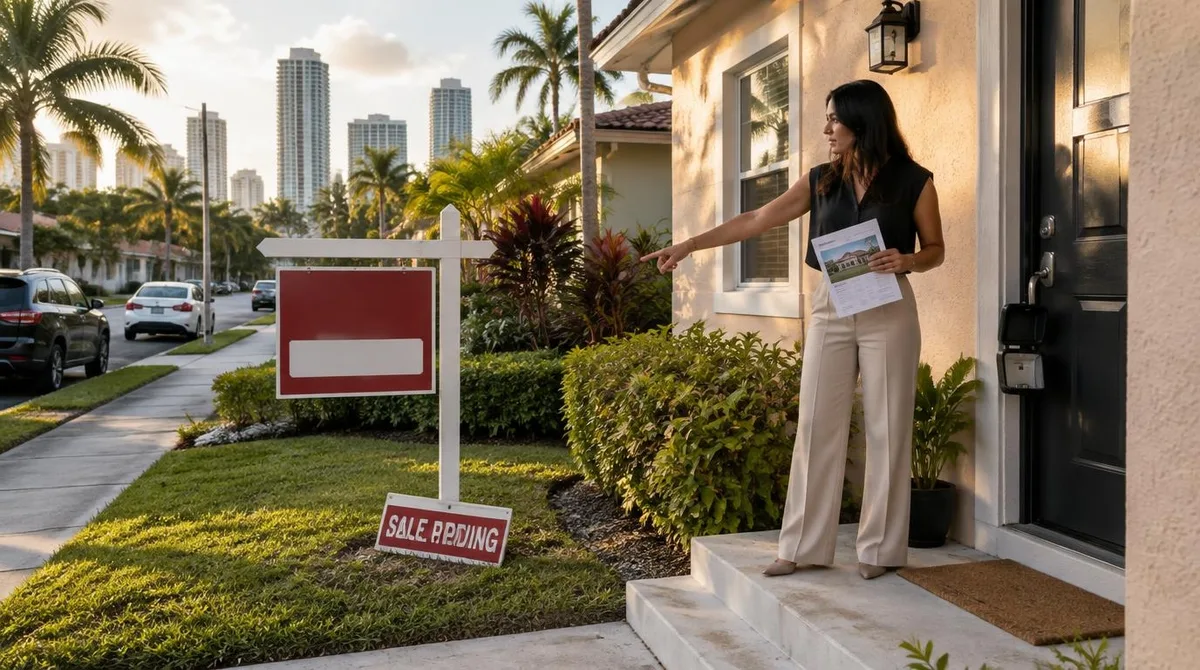
Is a Florida housing market crash coming? The honest answer is that no dataset shows a crash underway, and a crash is a specific event — a steep, broad fall in prices — not any softening in sales or listings. What Florida shows instead is a market that has cooled from its pandemic-era peak: homes sitting longer, sellers trimming expectations, and buyers with more room to negotiate. That is a slowdown, not a collapse.
The distinction matters if you are deciding whether to buy, sell, or wait. Crashes in living memory share a common signature: prices falling fast and everywhere at once, forced sales piling up, and credit drying out. A market where homes take longer to sell and list prices get negotiated down looks different on every one of those measures. For related coverage, see Florida's housing market at mid-2026: sales climb, homes still sit longer.
This piece lays out what a crash would actually look like, why today's conditions differ from the run-up to 2008, and what signs a Miami buyer or seller should watch.
What would a real crash look like?
A housing crash is not a slow market. It is a sharp, widespread drop in prices, usually paired with distress selling. Homeowners who cannot keep up with payments list at any price. Lenders pull back. Buyers step aside because they expect prices to keep falling.
Three conditions tend to show up together in a crash. First, prices fall quickly across whole regions, not just in a few overbuilt pockets. Second, a large share of owners owe more than the home is worth, which turns a job loss or a move into a forced sale. Third, lending standards either collapsed before the fall or freeze during it.
None of those conditions can be confirmed from general knowledge alone. They show up in data: price indexes, foreclosure filings, negative-equity estimates, and mortgage delinquency rates. If you hear the word crash, the fair question is which of those numbers moved, by how much, and who published them.
Why the 2008 comparison only goes so far
The last true Florida crash followed a boom built on easy credit. Lending standards were loose. Many buyers held adjustable-rate loans they could not afford once rates reset. When defaults climbed, a wave of distressed sales pushed prices down across the state, and Florida fell harder than most of the country.
Several structural differences matter today. Lending standards are tighter on paper: most buyers now take fixed-rate mortgages and are underwritten against verified income. That reduces the pool of owners who default simply because their payment jumped. Also, Florida's population has grown for decades, which keeps a floor under demand for housing. The state counted about 23.4 million residents in 2024, according to On the World Map, with major metros — Jacksonville, Miami, Tampa, Orlando — anchoring job markets that draw new arrivals.
That does not make Florida immune. It means the mechanism of 2008 — bad loans triggering forced sales at scale — is not automatically in place. A slowdown driven by affordability and rate levels behaves differently from one driven by credit failure.
What this means: the signals worth watching
Rather than guessing at headlines, track a short list of indicators, each of which answers a specific question.
- Price indexes, not list prices. Closed-sale indexes show what actually happened. List-price cuts show what sellers hope. They are different things.
- Days on market. Rising time-to-sale means softening demand. A crash needs falling prices on top of it.
- Inventory levels. More homes for sale gives buyers leverage. A flood of inventory, especially from distress, is the crash-relevant version.
- Foreclosure and delinquency filings. These measure forced selling. Without them, price weakness tends to be negotiated, not panicked.
- Insurance and carrying costs. In Florida these are unusually large parts of ownership cost. A home can be affordable to buy and expensive to keep.
Our analysis: the single most Florida-specific risk is not lending. It is the carrying-cost stack — insurance premiums, rising assessments on older condos, and property tax questions now under debate in Tallahassee. Those costs pressure owners directly, and they hit condo owners hardest.
Why Miami's condo market is the fault line
Florida's condo safety law, passed after the Surfside collapse, requires older buildings to fund repairs and reserves on a schedule. For owners in buildings that deferred maintenance for years, those bills can be large. Some owners sell rather than pay, which adds listings to exactly the segment where buyers are most cautious about assessments. This connects to our earlier piece, Florida's condo safety law in 2026: which deadlines passed and which remain.
This is the part of the Florida market where distress is most plausible, because the cost shock is real and dated — the deadlines are set by law, not by market mood. If you read about Florida price declines in any given quarter, check first whether the figures are driven by condos in older buildings. A condo-segment correction and a statewide crash are not the same event, and coverage that blends them will mislead you.
Practical steps for buyers and sellers
If you are buying, a slower market is working in your favor. You can negotiate on price, ask for concessions, and take time on inspection — including a close look at a condo building's reserve study and assessment history before you commit. None of that requires a crash forecast.
If you are selling, price to the current market rather than to last year's peak. Homes that sit get discounted in bigger steps than homes priced correctly at the start. And if you own in an older building, get ahead of the assessment math: know what your building owes, when, and what your share is.
If you are neither buying nor selling, the crash question is mostly noise. Your carrying costs, your building's health, and your own timeline matter more than any statewide label.
Where this leaves the crash question
The evidence supports a market that has cooled, not one that is crashing. Prices, sales pace, and inventory are the numbers to watch, and they should be read segment by segment — a statewide figure averages together new-construction suburbs, coastal single-family markets, and aging condo towers that face very different pressures.
What remains unknown is the path of the carrying-cost stack: where insurance rates settle, how condo associations fund their deadlines, and what the state does on property tax. Those are the forces most likely to move Florida housing from here. Watch them, and the crash question answers itself with data instead of drama.