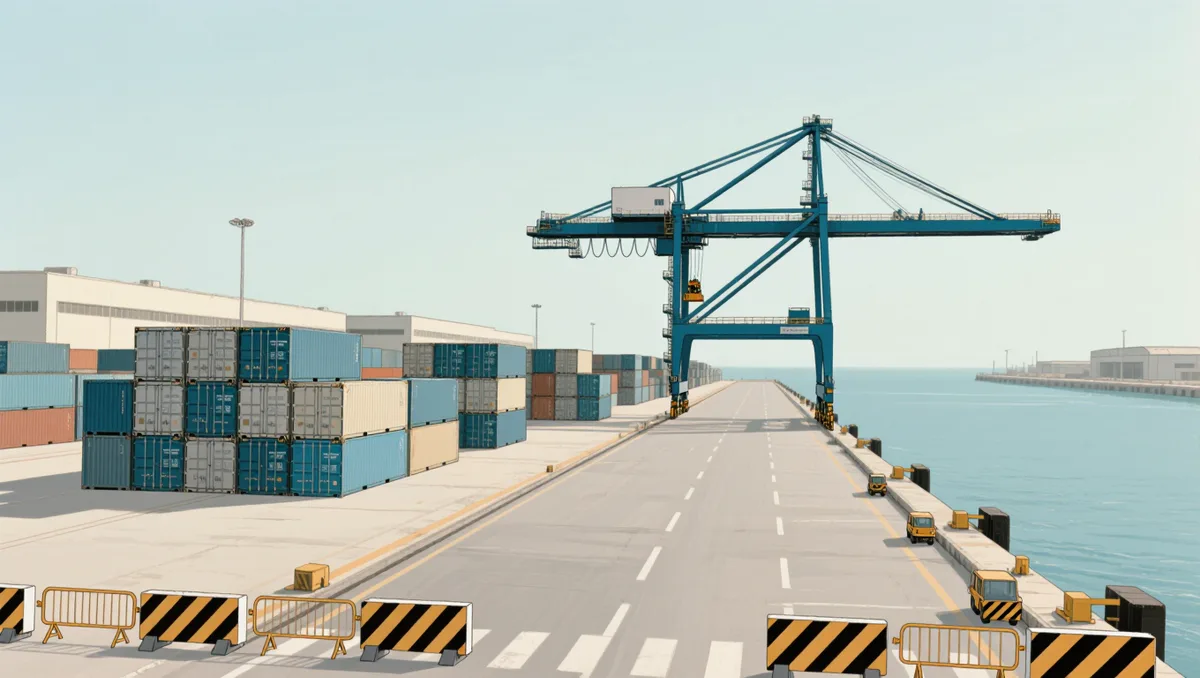
If you live near the Port of Miami or Miami International Airport, the big question is simple: what does the cargo buildout actually change for you? The honest answer is that it changes things slowly and unevenly. Construction phases run over years, job gains come in waves, and the neighborhoods that feel it most are the ones sitting on the truck routes.
This explainer walks through how port and airport capacity projects typically unfold, who gets hired, and which surrounding areas carry the costs. One caution up front: the figures that matter most here, like project budgets and hiring counts, come from the agencies running the projects, and they change. Check the current numbers before you make a decision based on anything below.
What is actually being built, and on what timeline?
Seaport and airport expansions rarely happen as one dramatic project. They arrive as a sequence of smaller ones: a new berth or a deeper channel here, a cargo yard or a warehouse there, a runway extension or a terminal upgrade somewhere else. Each piece has its own permit, its own funding, and its own schedule. That matters to residents because the disruption is long but local. One phase might close a road for a season while the next phase, a mile away, is still on paper.
Funding follows a similar rhythm. Port and airport work is usually paid for through a mix of port revenue bonds, state and federal grants, and user fees rather than the city's general budget. That is why the pace can shift from year to year. When grant cycles tighten, phases slip. When cargo volumes rise, agencies move faster.
City budgets still matter to neighbors, though. According to the City of Miami's official site, the City Commission adopted Resolution No. R-26-0320 in July 2026 and will hold its second budget hearing on September 24, 2026, at City Hall. Budget season is when residents can see, in public, which road, drainage, and mitigation projects near the port and airport made the cut.
Where do the jobs actually go?
Construction is the first wave. Building berths, terminals, and cargo facilities hires heavy-equipment operators, electricians, truck drivers, and skilled trades, mostly for the length of each phase. These jobs are real but temporary, and many go to workers already in the trades.
The second wave is permanent operations work: stevedores, warehouse staff, equipment mechanics, customs brokers, freight forwarders, and the office jobs that cluster around a growing logistics hub. A larger cargo operation also supports work away from the port itself, at distribution centers and trucking companies across Miami-Dade.
The honest trade-off is location. Port and airport operations jobs pay modestly for the region, and the facilities sit far from some of the neighborhoods where those workers live. Whether a buildout improves a nearby resident's job prospects depends a lot on training pipelines and on whether local hiring commitments are written into project agreements. Those commitments vary project by project, so read them rather than assume them.
Which neighborhoods feel it first?
The port sits on Dodge Island in Biscayne Bay, connected to the mainland by causeways. Its heaviest traffic runs through downtown approaches and onto the highway grid, so congestion shows up first on the causeway ramps and the streets feeding them, rather than deep inside residential blocks.
The airport is different. Miami International sits surrounded by working and middle-class neighborhoods, and its cargo growth lands directly on local streets. Areas near the airport see more heavy trucks, more overnight noise from air freight, and more industrial pressure on land that could otherwise hold housing or small businesses. Warehouses creep along the truck corridors, and that slowly changes what a block looks like.
For readers weighing a move, the practical rule is to map the truck route, not the facility. A house two miles from the port but off the truck path feels very different from a house on a designated freight corridor. Our analysis: proximity to the route matters more than distance on a map, and buyers and renters should walk the route at rush hour before signing anything. Our neighborhoods section covers how to read an area's street grid and traffic patterns in more detail.
How do you evaluate the impact where you live?
You do not need a planning degree to assess this. You need three documents and one habit.
- The project's public schedule. Port and airport agencies publish phase timelines and, often, community meeting notices. The schedule tells you when construction noise and closures reach your street.
- The traffic study. Major projects require one. It lists the roads expected to carry added trucks and the mitigation promised, like signal timing or road repairs. If your street is named, pay attention.
- The hiring and contracting terms. Local-hire and apprenticeship provisions appear in project agreements and commission agendas. They are the difference between jobs that circulate locally and jobs that commute in.
The habit is simple: read the agendas. County and city boards take public comment on these projects, and the record of who showed up and what was promised is public. For context on the wider market these projects serve, our coverage of Florida's population and housing trends explains why freight demand keeps climbing even as the moving-van era slows. This connects to our earlier piece, Florida is still growing, but the moving van era is slowing: what new census data shows.
What this means for renters, buyers, and small businesses
For renters near the airport, the near-term effect is mostly construction-period disruption: trucks, dust, and detours, not immediate rent swings. Longer term, industrial growth can hold rents down in some blocks by limiting new housing supply, and push them up in others by making the area more convenient to jobs. The direction is not predictable block by block, so treat anyone selling certainty with suspicion.
For buyers, the same truck-route logic applies. A property on a freight corridor carries a durability discount that shows up at resale. A property one block over may not. Compare the two on the same criteria before you price them in your head.
For small businesses, a bigger port and airport is mostly an opportunity story, but with friction. More freight means more customers for services along the corridors, from mechanics to food service. It also means construction-period access problems that can hurt a storefront for a season. If you are budgeting a launch near these corridors, our step-by-step guide to what it actually costs to open a business in Miami breaks down the line items. And for the rent side of the ledger, see our report on Florida rents in summer 2026. For related coverage, see Florida rents in summer 2026: Miami holds near $3,000 while the rest of the state cools.
The bottom line on Miami's cargo buildout
The port and airport expansions are long, phased projects that bring steady operations employment and concentrated disruption. The gains spread across Miami-Dade; the noise, trucks, and dust stay local. The neighborhoods on the freight routes carry most of the cost, and the public record, budgets, traffic studies, and project agreements, is where residents can hold the trade-off accountable.
What remains unknown from the public record is the fine print: exact phase dates, final hiring numbers, and how mitigation money gets spent. Those details live in agency documents that change. Read them before you rent, buy, or sign a lease near the port or the airport, and treat any single figure as a snapshot, not a promise.