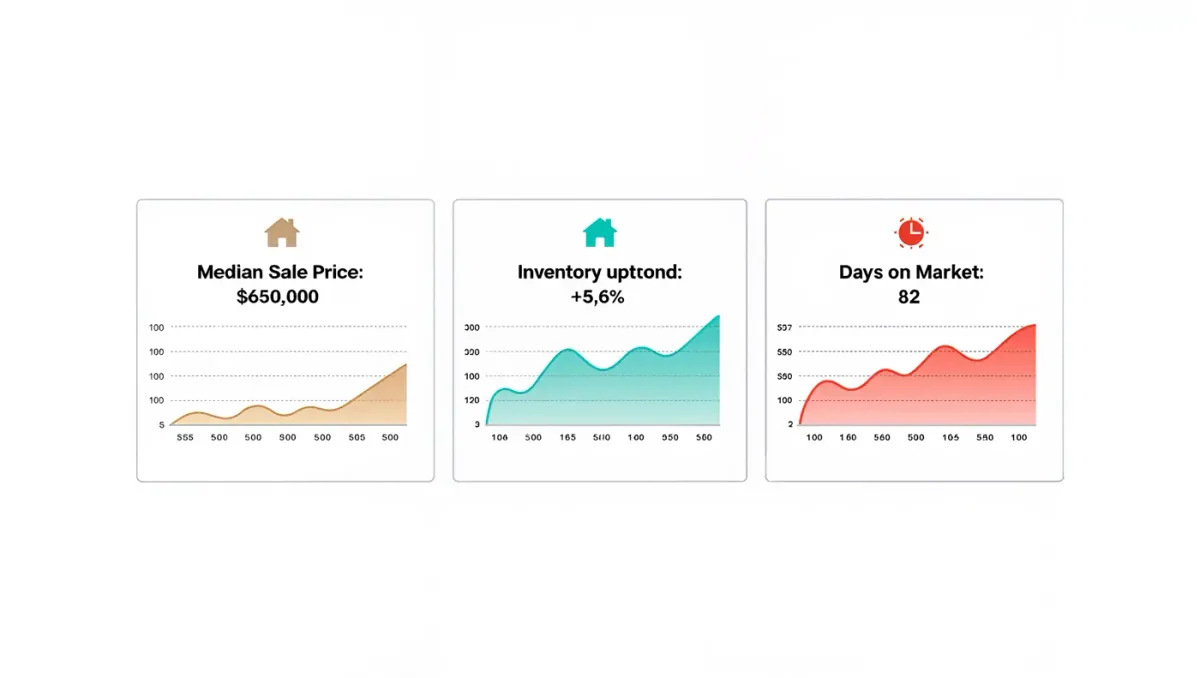
If you plan to rent, buy, or sell in Miami this fall, the mid-2026 baseline looks like this: home prices in the quarter ending June 2026 were essentially flat — down 0.05% year over year — with a median sale price of $650,000, per Redfin. Inventory has been climbing, per local 2026 trend reporting, and homes sat about 82 days on market per Realtor.com's mid-2026 data, a pace that leaves time for second visits, second opinions, and, for buyers, second offers.
What are the mid-year signals worth reading?
Three stand out. First, prices: flat overall, with per-metro reporting showing more softness in the condo segment, where cash buyers dominate and HOA costs weigh heaviest, and modest strength in single-family homes. Second, supply: inventory rose roughly 5.6% in local 2026 trend reporting, and the Miami Realtors' June 10, 2026 outlook — titled for resilience amid elevated mortgage rates — projects elevated supply into 2027 with only modest price growth forecast, about 1.3%. Third, mortgage rates: the same outlook's framing confirms what borrowers already know, that rates remain elevated enough to shape every affordability decision. House-price trajectories across the country are tracked publicly through the FHFA House Price Index, which puts local moves in national context.
What does this mean for a fall buyer?
Leverage has shifted, modestly. With inventory up and days on market near three months, buyers can ask for repairs, credits, and price moves that sellers of 2021 would have refused — and can walk away without another buyer instantly replacing them. The discipline that matters now is payment-based: underwrite the monthly cost at current elevated rates rather than counting on a refinancing rescue, and let any future rate drop be upside rather than plan.
What does it mean for renters and sellers?
For sellers, the data argue for pricing at the market the comps show, not the one from two years ago — overpriced listings are the ones absorbing the 80-plus-day sits. For renters, the fall signal is calmer but real: a cooling sales market with rising inventory eventually feeds the rental market as unsold condos and houses become rentals, so renewal negotiations in softening condo-heavy buildings are worth pressing, while tight single-family rental pockets may hold firmer. This is information, not market advice, and none of it is a prediction — the sourced facts are flat prices, rising supply, and long market times, and the decision is yours.