Your flood zone does not set your flood premium the way it used to — since FEMA's Risk Rating 2.0 pricing rolled out through 2023, premiums follow each property's individual risk, but the zone still decides whether your lender will require flood coverage at all, and that requirement is what changes the bill for most Miami buyers. As of 2025, per FEMA program guidance, a standard National Flood Insurance Program policy for a Miami-Dade single-family home commonly runs from the high hundreds to a few thousand dollars per year, with the widest spread at the coast.
Zone designations and premiums change as maps are revised; verify your address on the current map before any decision.
What do the flood zone letters in Miami actually mean?
Zones come from FEMA's Flood Insurance Rate Maps, and each letter is a shorthand for how the map models your property's exposure to a base flood — a flood with a 1 percent chance of happening in any year:
- Zone VE: coastal high hazard with wave action — oceanfront and immediate coastal streets in Miami Beach, Sunny Isles, Key Biscayne, and similar stretches. Highest regulatory bar; new construction faces elevation requirements.
- Zone AE: inside the 1 percent annual chance floodplain, typically along Biscayne Bay, canals, and rivers — much of low-lying Miami-Dade qualifies. Flood insurance is required by lenders for federally backed mortgages here.
- Zone X (shaded and unshaded): moderate to minimal hazard outside the modeled floodplain — but parts of inland Miami still flood from king tides and heavy rain, and Zone X is not a guarantee.
You can look up any address on FEMA's official Flood Map Service Center at no cost, per FEMA guidance as of 2025.
How much does the zone change your premium?
Less directly than it once did, and more through your property's specifics. Under Risk Rating 2.0, which FEMA fully phased in by April 2023, premiums are priced on distance to water, elevation of the lowest floor, replacement cost, and flood frequency — not just the map zone. Per FEMA program data as of 2025, that means two houses in the same Zone AE can pay meaningfully different premiums, and some Zone X properties near canals pay more than map zone alone would suggest.
| Factor | Effect on flood premium | Where it bites in Miami |
|---|---|---|
| Zone VE | Highest band | Oceanfront streets, beach municipalities |
| Zone AE | Elevated | Bayfront, canal-front, low-lying inland blocks |
| Elevation of lowest floor | Lower if raised | Ground floor vs. elevated construction |
| Replacement cost | Higher | Recent construction costs flow through pricing |
| Community CRS class | Discount | Municipal flood-management rating |
Is flood insurance required if I'm only in Zone X?
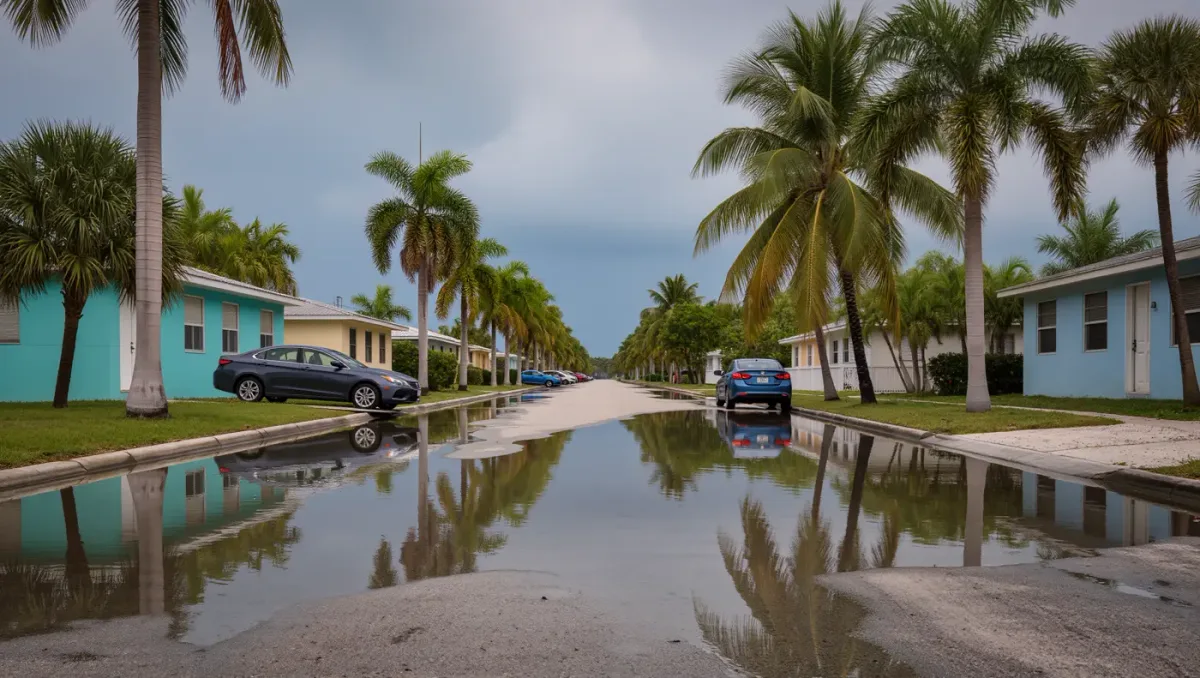
Federally backed lenders are not required to mandate it outside special flood hazard areas, so in Zone X it is usually optional — but optional is not the same as safe. Miami's dominant flood mechanism in recent years has been compound flooding: heavy rain falling during king tides with the drainage system already stressed. Per NOAA tide records as of 2025, Miami-area tide-gauge flooding days have been trending upward over recent decades. A homeowner's or renter's policy does not cover flood, so an uninsured Zone X flood comes entirely out of pocket.
What is the CRS discount and does Miami-Dade get one?
The Community Rating System rewards municipalities that exceed minimum flood-management standards with premium discounts on NFIP policies inside their jurisdiction — up to 35 percent at the best classes, per FEMA program materials as of 2025. Several Miami-Dade municipalities participate at varying class levels, and the discount applies automatically on qualifying policies; your quote reflects it. When comparing premiums across Miami Beach, Miami, and county areas, part of the difference can be the municipality's CRS class rather than the property itself.
Can you lower a flood premium on a Miami home?
Yes, and the levers are physical and documentary:
- Elevation certificates. If your home is elevated above the base flood elevation, a current elevation certificate can reprice the policy downward. Many Miami-Dade municipalities keep certificates on file from past permitting.
- Fill out the right forms. Standard flood policies price on replacement cost; an accurate, current figure avoids paying on an inflated one.
- Mitigation work. Elevating equipment, flood vents in enclosed foundations, and opening protection all factor into rating under the current system.
- Grandfathering and assumption. When maps change, continuous-coverage rules can preserve a better rate; ask your agent before letting a policy lapse.
How does the zone affect buying or selling?
The zone shapes the buyer pool through lender requirements and through what the annual number does to total ownership cost. A $2,000 to $4,000 annual flood premium, per 2025 FEMA-range estimates, is roughly $170 to $330 per month that a Zone X competitor property does not carry. Sellers in AE and VE should have the current flood policy, elevation certificate, and any claims history ready — per the disclosure norms Florida law imposes on real estate transactions as of 2025, flood history material to the property's value must not be misrepresented. Buyers should price the flood line before offering, not after inspection.
Figures are FEMA-program-based estimates as of 2025 and early 2026. Your address's rating, not its zone letter alone, sets the real premium — get a quote for the specific property.
Frequently asked questions
How do I find my Miami flood zone?
Search your address on FEMA's Flood Map Service Center, free of charge, per FEMA guidance as of 2025. Miami-Dade and municipal GIS portals also overlay flood zones on parcel maps; FEMA's own tool is the one lenders rely on.
Does Zone X mean no flooding in Miami?
No. Zone X is outside the modeled 1 percent annual chance floodplain, but king tides and extreme rain flood Zone X streets in Miami in some years. Insurance is optional there, and coverage for flood is excluded from standard homeowners policies.
Why did my flood premium change even though the map didn't?
FEMA's Risk Rating 2.0, fully in place since April 2023, prices on property-specific risk rather than the zone letter — distance to water, elevation, and replacement cost. Zone changes and premium changes now move on separate tracks.
Is flood insurance required for condos in Miami?
Lender requirements typically fall on the association's master policy for the building, and some lenders ask unit owners for contents flood coverage as well. Per FEMA as of 2025, NFIP offers a condo unit policy covering contents with defined limits and a 30-day waiting period.