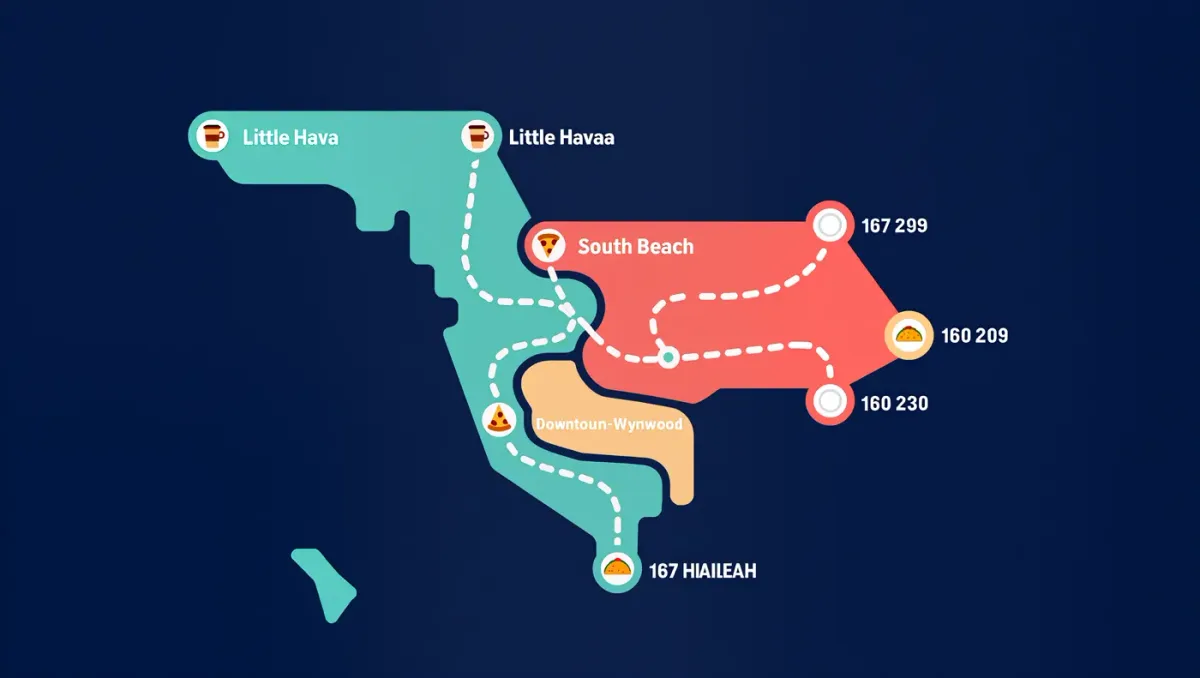
Miami eats late, and your best after-midnight options cluster in four zones: the Calle Ocho corridor in Little Havana, the South Beach club blocks, the Downtown-to-Wynwood strip, and 24-hour pockets of Hialeah. Expect $8 to $18 for a filling late plate as of early 2026 — Cuban counters and taco trucks anchor the cheapest end. Hours change often, so treat every time below as typical, not guaranteed.
This guide organizes the after-hours scene by neighborhood rather than by a list of venues, because kitchens open past midnight come and go seasonally in Miami. What holds steady is where they cluster, what they serve, and the price bands you should expect at 1 a.m. versus 4 a.m.
Which Miami neighborhoods have food after midnight?
Four zones carry most of the late-night load, each with its own character and closing rhythm.
- Little Havana (Calle Ocho corridor, roughly SW 8th Street between 4th and 17th Avenues). Cuban windows and cafecito counters, some pouring past 2 a.m. on weekends, plus 24-hour bakeries within a short drive. Croquetas and media noches are the play; prices run $3 to $10.
- South Beach (Ocean Drive and the Collins Avenue blocks). The classic post-club zone: pizza slices, sandwich shops, and a handful of diners, with a few kitchens serving until 4 or 5 a.m. on weekends. Prices are the least friendly of the four zones — $12 to $20 for a slice-plus-drink combo, higher on Ocean Drive itself.
- Downtown, Brickell, and Wynwood. Food halls and taquerias that keep late weekend hours, generally until 1 to 3 a.m. Taco and arepa windows in the $8 to $14 range, plus late-night burger counters.
- Hialeah. The quiet workhorse: 24-hour cafeterias and Cuban windows along the Palm Avenue and 49th Street corridors, feeding hospital shifts and early airport crews. Cheapest of the four, $5 to $12, honest portions, no scene.
What can you eat at 3 a.m. in Miami?
After 2 a.m. the list shortens but does not disappear. Realistic 3 a.m. options: pizza slices in South Beach, 24-hour Cuban cafeterias in Hialeah and along the Calle Ocho approach, taco trucks posted near late corridors — permits and locations shift, so follow the glow — and a small set of diners and sandwich counters near the airport and port that never close. Food-hall stalls in Downtown and Wynwood mostly shutter by 3 a.m. even on weekends. If your night ends in a residential neighborhood rather than one of these zones, the honest answer is a rideshare to the nearest corridor rather than a search on foot.
How much does a late-night meal cost in Miami?
Prices run noticeably higher after midnight in the club zones and stay flat at neighborhood counters. Typical bands as of early 2026, subject to change:
| Zone | Typical late plate | Hours you will find open | Crowd |
|---|---|---|---|
| Little Havana counters | $3–$10 | until 2–3 a.m. weekends | locals, service workers |
| South Beach | $12–$20 | until 4–5 a.m. weekends | club crowds, visitors |
| Downtown / Wynwood | $8–$14 | until 1–3 a.m. weekends | bar hoppers, rideshare drivers |
| Hialeah | $5–$12 | 24 hours in places | shift workers, families |
Two money notes. Late-night surge pricing on rideshares can cost more than the meal itself — check before committing to South Beach from inland neighborhoods. And several counters are cash-preferred at late hours; an ATM fee on top of a $9 sandwich is a avoidable tax.
What should you order after a night out?
Order for salt, fat, and speed, in that order. The proven late-night Miami lineup: a media noche or pan con bistec pressed and cut in thirds, a paper sleeve of croquetas, tacos al pastor double-wrapped in foil, or a slice with the crust re-crisped in the oven. Heavy cream sauces and fried platters read less well at 2 a.m. than pressed sandwiches and rice-and-bean plates, and everything on the late counters is built to be eaten standing up or in a car. Add a cafecito or cortadito if you still have a drive home.
Cash or card at late-night counters?
Both usually work, but the balance tilts cash after midnight. Several window-only counters and most taco trucks run smoother on small bills, card minimums are more common at late hours, and a cash order at a busy window moves a beat faster than a terminal waiting on a network. Carry a few fives. If you must use an ATM in the club zones, expect out-of-network fees on top of the surcharge — withdraw earlier in the evening instead.
Is it safe to eat out late in Miami?
The late-night corridors above are busy with people and rideshare traffic until well after midnight on weekends, which is the practical safety condition — crowded and lit beats empty and dark. Standard city rules apply: keep phones tucked on quiet side streets, watch your drink at bars, and use a rideshare rather than walking long distances between zones. South Beach's late blocks have a heavy police and security presence on weekend nights; Hialeah's 24-hour counters are ordinary family businesses. No zone here requires anything beyond normal urban awareness.
How do you get home after a late meal without a car?
Metrorail and Metromover shut down around midnight, so they are only useful for the earliest part of the evening. Plan on rideshares after that; fares run highest between 2 and 3 a.m. when demand peaks. One practical trick: eat in the zone where you finish the night rather than crossing the city — a late sandwich in South Beach beats a $40 ride to a 24-hour spot in Hialeah unless the company is worth it. The city's late-night geography is walkable within each zone and expensive between zones.
What do late-night workers eat in Miami?
Follow the uniforms. Hospital shifts, airport crews, and rideshare drivers keep Hialeah's 24-hour cafeterias and the airport-corridor diners running, and their orders are the best value on this page: full Cuban plates with rice, beans, and a protein for $8 to $12, cafe con leche refills, and breakfast served at all hours. Service-industry workers closing their own shifts fill Little Havana counters between midnight and 2 a.m. If you want the least touristy version of late Miami, eat where the shift workers eat — same kitchens, better prices, no line at the club door.