Hialeah is Miami-Dade's most affordable full-service city, and the math is unambiguous: as of May 2026, typical one-bedroom rents listed around $1,400 to $1,800 a month, per Zillow city-level data — roughly $500 to $900 below comparable Miami units — while the commute to Downtown runs 25 to 40 minutes by car or about 40 minutes door to door on the Metrorail from the Hialeah station. You trade time and, mostly, English-dominant convenience for the county's lowest rents.
This guide prices both sides of that trade: rent by unit type, the commute by mode, daily-life costs, and the checks that matter before signing. It publishes information, not housing advice; figures carry source and month on their face.
Where is Hialeah, exactly?
Hialeah is a large incorporated city northwest of Miami, running from the Miami city line and the airport-edge tracts near Miami Springs on the east, past the Palmetto Expressway (SR 826) toward Hialeah Gardens on the west, and from the Miami border on the south up to the industrial city of Medley on the north. Its center of gravity is the grid around W 49th Street and Palm Avenue, with the Hialeah Park grounds and the civic buildings nearby.
Two addressing notes save confusion. Hialeah Gardens is a separate small city to the west, and many addresses posted as Hialeah sit in unincorporated or neighboring areas; confirm the municipality on the county property search. And Hialeah's east side near the Miami Springs line differs in housing stock and price from the western blocks — run your searches by neighborhood, not city-wide averages.
What does rent cost in Hialeah?
As of May 2026, per Zillow city-level figures, studios mostly listed around $1,100 to $1,400, one-bedrooms roughly $1,400 to $1,800, two-bedrooms from about $1,700 to $2,300, and three-bedroom houses from the low $2,000s upward by condition. The stock is overwhelmingly mid-century single-family homes, duplexes, and small walk-up buildings from the 1950s through the 1970s; new construction exists but is a small slice.
| Unit type | Typical range, May 2026 (per Zillow) |
|---|---|
| Studio | ~$1,100–$1,400 |
| 1-bedroom | ~$1,400–$1,800 |
| 2-bedroom | ~$1,700–$2,300 |
| 3-bedroom house | ~$2,200–$3,200 by condition |
Condition moves the numbers more than location does here. Remodeled units with central air and impact windows can outprice untouched ones by $300 or more in the same blocks, and summer electric bills in older units with window units add $100 or more. Ask for the July bill when you tour; it is the difference between a cheap rent and a cheap cost.
What does the commute cost in time and money?
By car, Downtown runs 25 to 40 minutes in normal traffic and Brickell 30 to 45, per typical 2025 Miami-Dade travel patterns, via the Palmetto, NW 36th Street, or I-75 connections depending on your starting block. Rush hour stretches both meaningfully; the airport is the exception, at 15 to 25 minutes from most of the city.
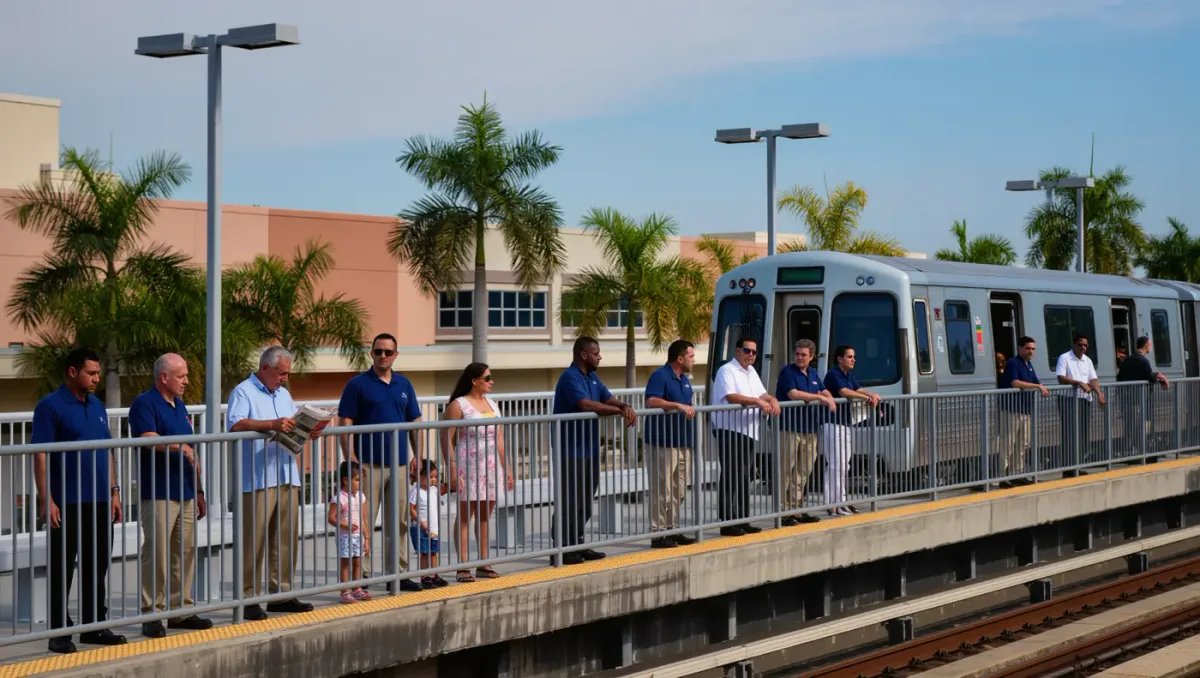
By transit, the Metrorail's Hialeah station, near the Hialeah Park grounds, is the line's western terminus, with Downtown stations about 30 to 35 minutes away and Brickell one transfer-free stop further, per Miami-Dade Transit schedules as of 2025. Add a local bus or walk to reach the station from most blocks, and the realistic door-to-door is 40 to 55 minutes. The Tri-Rail's Hialeah Market station serves the coastal corridor north to Broward and Palm Beach — genuinely useful if you work there. Monthly transit passes cost a fraction of downtown parking; for a Brickell worker, the rail math is the strongest argument for Hialeah.
Who lives in Hialeah?
Census Bureau ACS 2023 five-year estimates describe one of the most consistently Hispanic large cities in the United States: roughly nine in ten residents identify as Hispanic, with deep Cuban-American roots and large recent-arrival households from across Latin America, a median household income below the county figure, and one of Florida's highest shares of Spanish spoken at home.
Daily life reflects it. Commerce runs on Spanish and on cash-friendly small business; the city's butcher shops, cafeterias, and the Dollar-tree-adjacent retail corridors price below Miami's eastside for comparable baskets. For a Spanish speaker, daily friction is low. For a monolingual English speaker, it is manageable but real — landlords, government counters, and service work all function primarily in Spanish, per community reporting through 2025.
How do daily costs compare beyond rent?
Rent is only half of Hialeah's arithmetic, and the other half reinforces it. Everyday food costs run below Miami's eastside for comparable baskets, per shelf prices reviewed in late 2025; parking is typically free at home and mostly easy at errands; and lower FEMA flood-zone exposure inland keeps insurance-driven pass-throughs smaller than in coastal districts, per FEMA mapping as of 2025.
The offsetting costs are mostly time and transport. A two-car household — common where transit is a connection rather than a walk — carries insurance, fuel, and depreciation that can erase $300 to $500 of the rent savings for one commuter, per typical ownership-cost ranges for 2025. Households where one worker rides the Metrorail and the other works locally capture most of Hialeah's advantage; households with two opposite-direction drivers capture the least. Model your own two-car line honestly before you credit the city with the full spread.
What else changes when you move to Hialeah?
- Insurance and flood: the city sits inland on comparatively high ground, and its FEMA flood-zone exposure is lower than the coastal districts, per FEMA mapping as of 2025 — one reason total housing costs stay down.
- Building age: pre-1980 stock dominates; ask about roofing, electrical panels, and air-conditioning age, and what the July bill runs.
- Parking is easy: most homes and small buildings include off-street parking, unlike the close-in districts where it is a line item.
- Crime varies by area: per Miami-Dade crime-mapping data reviewed for 2025, incident rates cluster around specific commercial corridors and are lower on stable residential blocks; visit at night, as anywhere.
Hialeah's deal is the clearest in Miami-Dade: the county's lowest rents, easy parking, and inland flood comfort, paid for with a longer commute and a daily life that runs in Spanish first. Run the May 2026 ranges against your commute mode, and the city either fits your math or it does not — few places in the county are this binary.