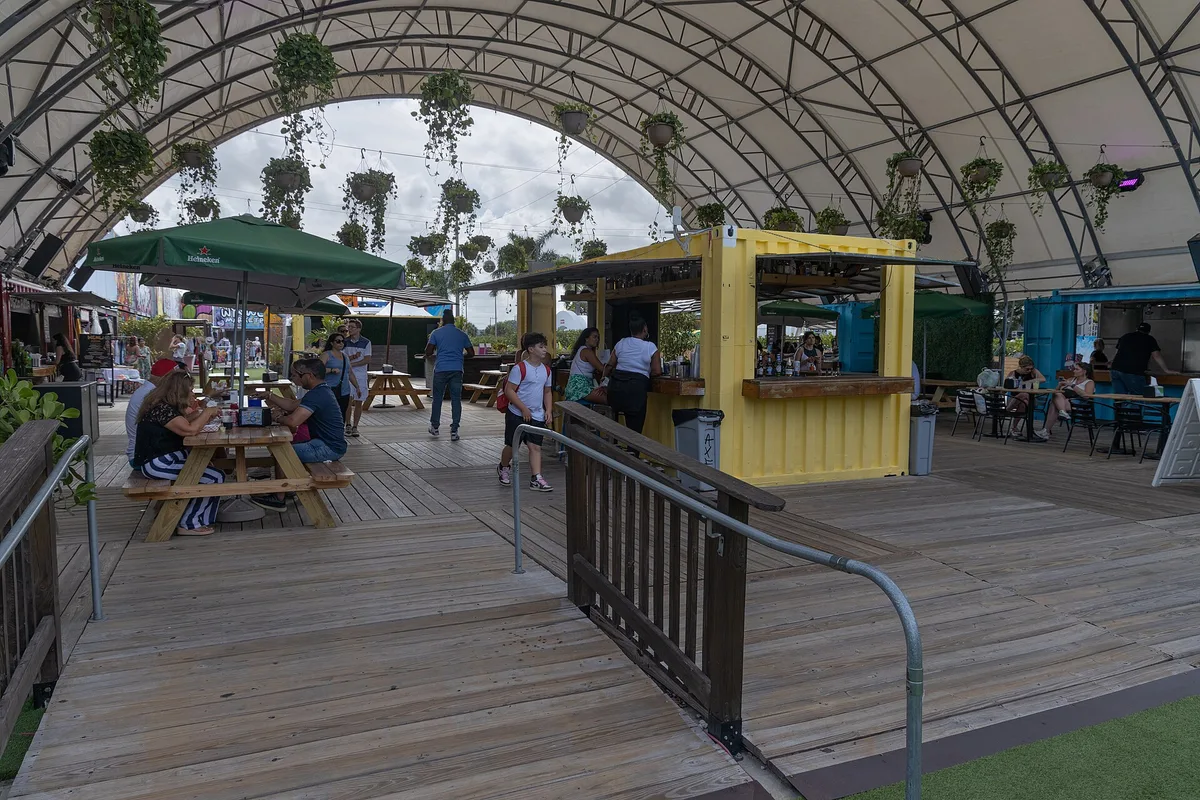
Wynwood looks like nowhere else in Miami: warehouses wearing murals, galleries in garages, and espresso bars where loading docks used to be. Locals know it as more than a backdrop for photos. It is a real neighborhood with borders, history, and a rhythm worth learning before you go.
Here is what is actually worth your time in Wynwood, and how to see it the way residents do. For related coverage, see What living in Wynwood actually means after the galleries close.
Know Your Bearings
Wynwood sits north of Downtown Miami and Overtown, adjacent to Edgewater. As Wikipedia's neighborhood profile explains, it is roughly divided by North 20th Street to the south, Interstate 195 to the north, Interstate 95 to the west, and the Florida East Coast Railway to the east. Two sub districts matter for visitors: the Wynwood Art District in the northern part, and the Wynwood Fashion District along West 5th Avenue.
Those boundaries are useful in practice. Park once and most of the neighborhood is walkable, while the highway on the west edge keeps most through traffic out of the interior blocks.
First visits work best with a loose plan. Enter from the south near North 20th Street, drift north through the gallery blocks, and let the walls decide the route. Give the visit a few hours at least, because the neighborhood rewards lingering more than checking boxes.
From El Barrio to Art Mecca
Wynwood's story is one of reinvention stacked on reinvention. Long referred to as Little San Juan and commonly known as El Barrio, it became home to many Puerto Rican families who arrived from the island and northeastern cities in the 1950s, and Puerto Rican owned restaurants, shops, and markets still line its streets. The area had been a fashion hub since the 1920s, when Jewish New Yorkers opened factories there and built a thriving garment district.
Art arrived next. After the Midtown Miami development began in 2005 on a former rail yard, previously abandoned warehouses filled with artists, restaurants, cafes, and lounges. In 2009, the developer Tony Goldman commissioned artists to create Wynwood Walls, an outdoor exhibition of rotating street art. Wikipedia's profile calls it the world's largest outdoor street art museum, drawing millions of visitors a year, with featured artists including Shepard Fairey, Okuda San Miguel, and ROA. Reinvention did not erase the past here; it simply stacked on top of it.
What Is Actually Worth Your Time
- Wynwood Walls and the Art District around it: the core attraction, best enjoyed early before the crowds build.
- The murals beyond the Walls: much of the neighborhood is an open air gallery, and side blocks hold strong work with smaller crowds.
- Galleries and collections: the Art District gathers exhibition spaces worth a slow afternoon.
- The Fashion District: along West 5th Avenue, a working garment area that hints at the neighborhood's industrial roots.
- Local plates: Puerto Rican owned restaurants and new kitchens share the same blocks.
Go Like a Local
Timing changes everything. Weekday mornings feel like a village; weekend afternoons feel like a festival. Walk between blocks rather than driving, since the best art hides between destinations. Support the small galleries and family run counters, because the neighborhood has been gentrifying for years, and the businesses that gave Wynwood its character need regulars more than spectators.
And look up and down, not just straight ahead. The murals cover walls, sidewalks, and shutters, and some of the best pieces wait around corners.
Conclusion: A Neighborhood That Keeps Repainting Itself
Wynwood for locals is not a single attraction but a habit: coffee among the galleries, art between errands, dinner where the neighborhood began. Learn the borders, come early, and wander one block off the beaten path. The walls will have changed by your next visit, and that is exactly the point. This connects to our earlier piece, Little Haiti's cultural renaissance: a neighborhood guide to the art, the kitchens, and what comes next.