Living well in Miami is less about willpower than about timing. The city hands you free exercise — beaches, bay paths, parks — and then, for half the year, heat and humidity that make the midday version of it risky. The practical answer is to move your routine to the margins of the day, build habits that work indoors when the weather turns, and treat the tropics as a factor to plan around rather than fight.
It is a workable definition. As Dictionary.com puts it, living is simply "the act or condition of a person or thing that lives" — and in Miami, the condition includes a climate that rewards early risers and punishes anyone who treats October like April. This guide sets out what that means for fitness, food, and time outdoors, without promising that any of it is easy.
What does a realistic fitness routine look like in this climate?
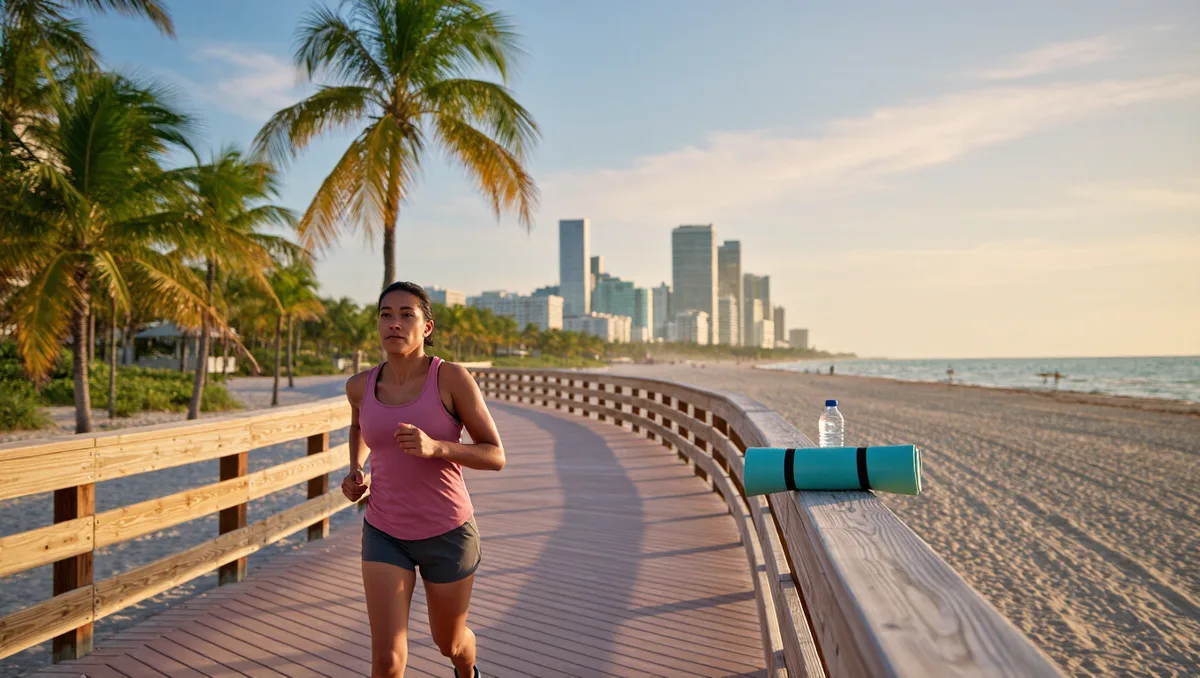
The honest version is seasonal. From roughly late fall through early spring, outdoor exercise is comfortable most of the day, and Miami's waterfront paths and parks do most of the work for you. From late spring through early fall, the same workout at the same hour can be a different experience entirely: high humidity limits how well sweat cools you, which is why the standard advice is to shift hard sessions to early morning or evening and to drink more water than feels necessary.
Indoor options carry the summer. Gyms and studios run year-round, and the cost spread between a big-box membership and a boutique class is wide enough that the choice is a budget decision, not just a preference one. Our analysis of the local scene is that most people do best with a hybrid: an indoor anchor for the hot months, plus one or two free outdoor habits — a bay walk, a swim — that survive on either side of the season. We compare what gyms, studios, and free options actually cost in Gym and fitness costs in Miami: big-box gyms, studios, and free options compared. Readers following this should also see Gym and fitness costs in Miami: big-box gyms, studios, and free options compared. Readers following this should also see Gym and fitness costs in Miami: big-box gyms, studios, and free options compared.
Swimming deserves its own note. It is the obvious tropical exercise — cooling, low-impact, and available at public beaches and pools — but ocean and bay conditions change, and the county posts advisories when bacteria levels warrant them. Checking the flag or the advisory before you swim is part of the routine, not an optional extra.
How do you eat well here without fighting the environment?
Miami's food culture runs on generous portions, late dinners, and a lot of fried plantains, and there is nothing wrong with any of that in moderation. The practical nutrition question is structural: how much of your week do you cook, and how much do you outsource? A routine that works for most people is a small number of repeatable meals built around whatever is cheap and fresh that week, plus deliberate restaurant nights rather than default ones.
Two local realities shape the grocery side. First, tropical produce is often cheaper and better here than up north — mangoes, avocados, and citrus grow in people's yards, and the fruit stands in Little Haiti and Hialeah reflect that. Second, eating late is the cultural default, and a heavy meal at 10 p.m. sits differently than the same meal at 6. You do not have to abandon Miami's schedule; shifting the heaviest part of a late dinner earlier is the low-effort version of the same idea.
For the restaurant side, the city's dining scene is a strength, not an obstacle — the trick is deciding in advance which meals are occasions. Our dining coverage tracks where the value actually lands, neighborhood by neighborhood.
What outdoor routines actually survive a Miami summer?
The ones scheduled around the sun. A few patterns hold up:
- Water activities over pavement. A kayak or paddleboard session, a swim, or even standing in the shallows cools you while it works you. The mangrove creeks and quiet coves are the calmest versions of this, and our beach comparison by crowds, parking, and vibe helps pick a launch point.
- Shaded and linear over open and circuitous. Tree-canopied neighborhood streets and boardwalks beat open plazas once the sun is up. Walk before 9 a.m. or after 6 p.m. in the hot months, and slower at midday.
- Wheels as transport, not just exercise. Biking to a destination turns a workout into an errand, which is the most reliable way to keep it on the calendar. What the lanes and bike share actually cost is covered in our biking guide.
- A car-optional fallback. Heat plus parking costs push many routines toward walking-distance options. What works and what doesn't when you ditch the car is in Living in Miami without a car: what works and what doesn't.
Storm season is the other constraint. From June through November, outdoor plans need a fallback, and the weeks around a named storm need a genuine one. Our hurricane season checklist for your apartment and family covers the preparation side; the wellness version is simpler — know which of your habits can move indoors on a week's notice.
What does the summer heat do to sleep, bills, and recovery?
Wellness is not only workouts, and in Miami the biggest health-adjacent expense is climate control. Air conditioning is not a luxury here; it is the difference between sleeping and not, and it shows up on every bill. What a condo, a house, or a rental apartment actually costs to run month to month is broken down in Utility bills in Miami by housing type: condo vs house vs rental apartment — worth reading before you sign any lease, because a cheap rent with bad insulation is often the expensive option.
Recovery habits matter more in the tropics, too. Hydration is the obvious one; the less obvious one is pacing. A routine designed for a temperate climate — same distance, same hour, every day — will quietly become a grind here in August. The people who keep their habits year-round are the ones who let intensity flex with the season and treat the cooler months as their outdoor season, not the reverse.
Heat is also a budget issue, which is why we treat the two together: how to run a home, a budget, and a schedule through the hottest stretch of the year is in Miami summer heat: how to run a home, a budget, and a schedule through it.
What this means: a routine that fits the city
Nothing here requires a program, a membership, or a personality change. The version of living well that Miami supports looks like this: one indoor anchor habit you can keep in any weather, one water-based habit you actually enjoy, walking or biking folded into errands where the route allows it, cooking anchored to a few repeatable meals, and a calendar that treats the cooler months as the outdoor season. The trade-offs are real — the summer is long, the storms are disruptive, and the late-night food culture is seductive — but the raw materials, from free beaches to year-round produce, are better here than most places. The routine just has to be built for the climate you actually have.