A good Miami weekend is not a checklist. It is one beach morning, one neighborhood walked on foot, and one block of empty time you refuse to schedule. Pack the two days tighter than that and you spend the whole weekend in a car.
The plan below runs Saturday and Sunday and leans on sourced prices, not vibes. Parking at Crandon Park runs $7 plus tax Monday through Thursday and $10 plus tax Friday through Sunday, per Miami Tourism, and entry to Bill Baggs Cape Florida State Park costs $8 per vehicle. Those two numbers shape most of the decisions.
For readers still deciding where to set up base camp, our comparison of which Miami beach fits different crowds, parking budgets and moods covers the trade-offs in detail. The short version: stay north of 63rd Street if you want sand without the scene. For related coverage, see Which Miami beach is right for you? A comparison by crowds, parking, and vibe.
What does a realistic Saturday look like?
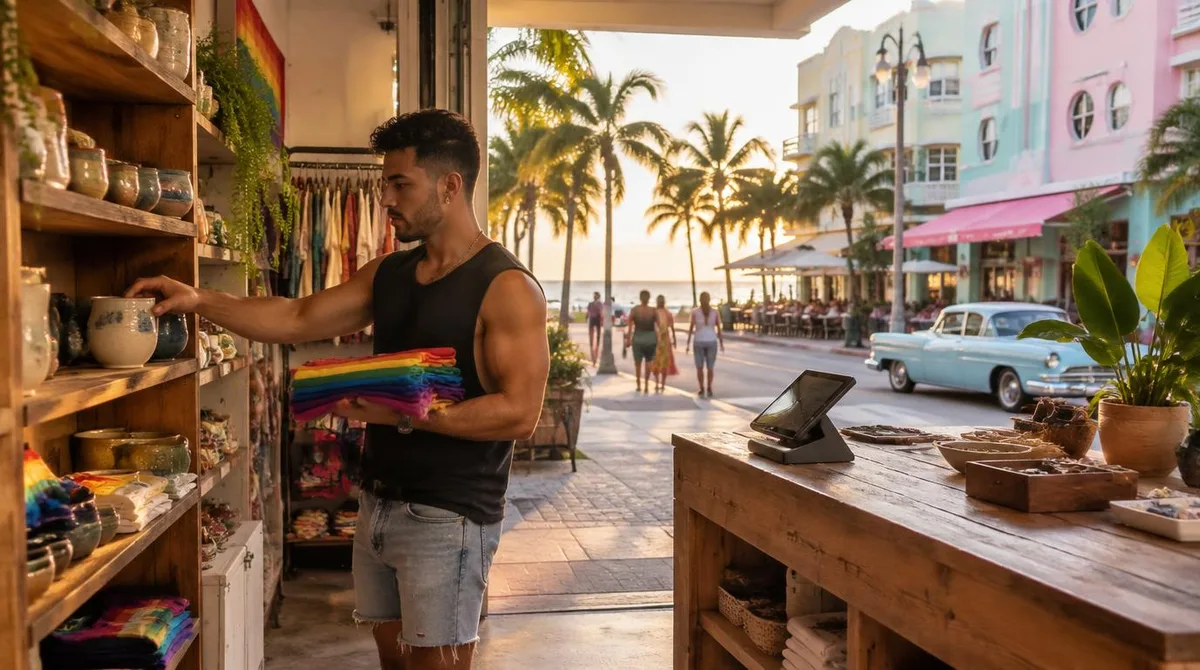
Start early, because the famous stretch of sand between 5th and 15th Streets on Miami Beach fills fast on weekends. According to Miami Tourism's guide to things to do in Miami, that South Beach stretch is the city's most famous, fronted by the pastel buildings of the Art Deco Historic District and dotted with the colorful lifeguard towers. Parking is scarce there; the guide points to meters on Collins Avenue or the 7th Street Garage.
If the South Beach intensity is not for you, two quieter options sit close by. North Beach and Surfside, above 63rd Street, offer wider sand, fewer people, and a food scene along Harding and Abbott Avenues. Matheson Hammock Park in Coral Gables has a man-made atoll pool flushed by Biscayne Bay's tides — calm, shallow water that suits small children, with the downtown skyline across the bay.
By early afternoon, leave the sand. This is the mistake tourists make: they treat the beach as the whole day. Locals treat it as the first hour.
Where should you eat without a reservation or a wait?
Head west to Little Havana and walk Calle Ocho, SW 8th Street, from SW 12th Avenue to SW 27th Avenue. Give yourself a couple of hours at a relaxed pace, per Miami Tourism. Along the way you pass ventanitas — walk-up coffee windows — serving cafecito for $1.50, cigar rollers at El Titan de Bronze, and domino players in Máximo Gómez Park.
Eat where the walk takes you. Versailles Restaurant is the classic Cuban meal, and La Carreta is the Cuban sandwich stop. Neither requires a plan beyond showing up. Our dining coverage tracks the wider restaurant scene if you want a sit-down dinner later.
What is worth seeing in Wynwood — and what is new?
Wynwood works best in the late afternoon, when the light flattens and the murals stop glaring. The Wynwood Walls, founded in 2009, rotate murals by artists from around the world, and the surrounding blocks carry street art across facades, alleys and parking lots, according to Miami Tourism. The Museum of Graffiti and Superblue's immersive art experiences sit in the same neighborhood.
One newer option: the Balloon Museum's "Pop Air" exhibition at Mana Wynwood, which Time Out describes as an entire immersive environment of inflatable art — a geometric labyrinth, a sphere installation that responds to movement, and balloons swirling in controlled tornadoes. Per Time Out Miami, the show has already run in Rome, Paris, New York and LA, and the Mana space gives the installations more room than anywhere before. It is ticketed, so check hours before you build an evening around it.
How do you spend a slower Sunday?
Sunday is for Key Biscayne or the water, not for another art district. Crandon Park's two-mile beach on Key Biscayne has softer sand and calmer water than South Beach, with a distinctly Caribbean feel. The northern end draws surfers and kiteboarders; families gather at the southern end, where shallow sandbars form natural wading pools. There is a family amusement center, a nature center, cabana rentals, picnic areas with grills, and parking for just under 3,000 vehicles, per Miami Tourism.
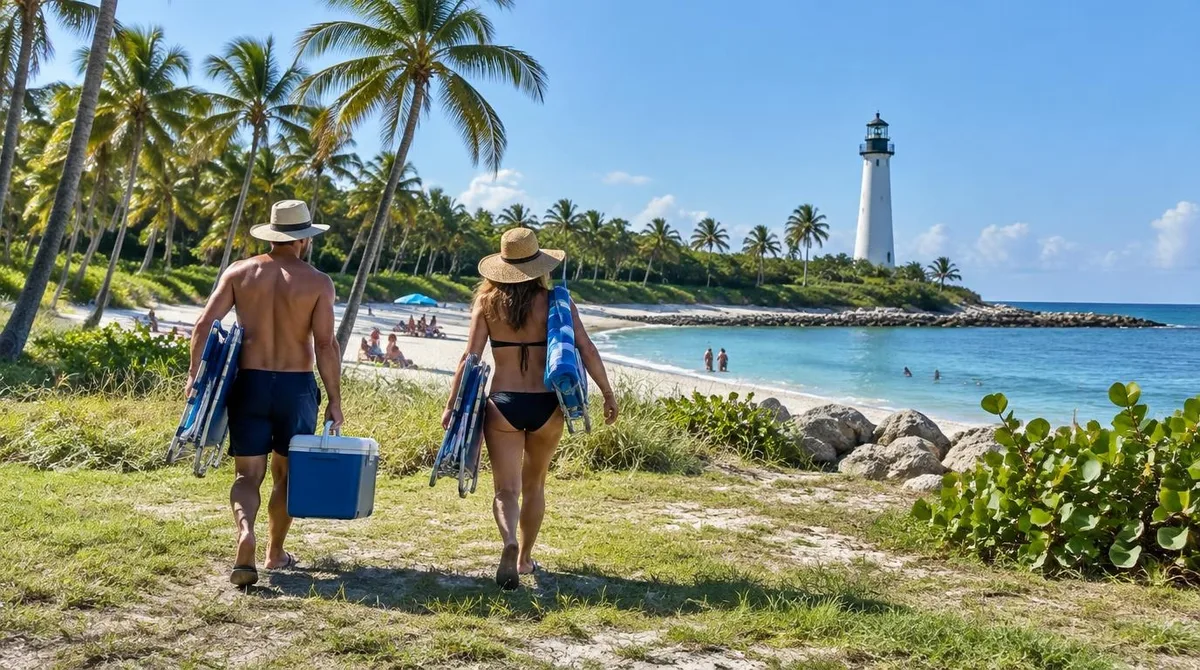
At the island's southern tip, Bill Baggs Cape Florida State Park wraps around the Cape Florida Lighthouse, the oldest standing structure in Miami-Dade County, dating to 1825. The concession rents kayaks and paddleboards for the mangrove-lined coast. Entry is $8 per vehicle. If you would rather not drive at all, our guide to living in Miami without a car covers what actually works transit-wise.
If Sunday turns rainy, the Miami Marlins play at loanDepot Park under a retractable roof with air conditioning, which Time Out notes makes summer games a reliable indoor option. The team runs theme days including Bark at the Park and $1 kids' tickets on Mondays, plus a biweekly Saturday Beerfest with unlimited five-ounce craft beer pours.
What does the whole weekend cost?
Here is the honest arithmetic, from sourced figures only:
- Crandon Park parking: $7 plus tax weekdays, $10 plus tax weekends.
- Bill Baggs entry: $8 per vehicle.
- Cafecito at a ventanita: $1.50.
- South Beach parking: meters on Collins Avenue or the 7th Street Garage — rates vary, so bring change and a fallback.
Two people can run the full plan — beach, Calle Ocho, Wynwood, Key Biscayne — for under $30 in entry and parking fees before food. The food is where the budget flexes. If money is the constraint, our itemized look at Miami's real cost of living puts a weekend like this in the context of a monthly budget. We covered a connected angle in Miami on a budget: the real cost of living, itemized.
What this means for your planning
Our analysis: the difference between a good Miami weekend and a burnt-out one is geography, not itinerary. South Beach, Wynwood and Little Havana sit in a rough triangle; Key Biscayne and Coral Gables sit south and west. Pick one cluster per day. Do not cross the county twice.
Timing matters more than most guides admit. Miami Tourism's guide to the city per Visit Florida notes the best weather runs December through May — which is also peak tourist season, so the same beaches cost you more patience. In the slower months, seasonal programs change the math: Miami Spice, the annual restaurant program, runs discounted three-course menus at more than 300 participating restaurants, starting at $40 for brunch and lunch and $50 to $65 for dinner, excluding tax and gratuity, according to Time Out. That is the cheapest way to eat at restaurants you would otherwise skip.
What the evidence established: a two-day plan built around early beach hours, one walkable neighborhood per day, and one deliberately empty block costs little and delivers most of what visitors come for. What remains unknown: parking rates at individual garages and museum hours change, so verify both the week you go. And if a full Saturday at Vizcaya or a longer stretch of mangrove water appeals, we have separate guides to spending a Saturday at Vizcaya and the quieter sides of the city.