Miami Shores and North Miami share a border around NE 123rd Street and look similar from a car window, but as of November 2025 the rent math splits clearly: per Zillow neighborhood data, a one-bedroom in North Miami typically listed around $1,600 to $2,100, while in Miami Shores comparable units ran roughly $2,000 to $2,600, with single-family houses in the Shores starting near $3,800. Over a year, that gap is $4,000 to $6,000 for a similar commute.
This comparison runs both places through the same criteria in the same order — boundaries, rents, demographics, commute, parks, and daily errands — so you can see where your own trade sits. It publishes information, not housing advice; every figure carries its source and month, and you should re-verify before signing.
Where are the boundaries of each?
Miami Shores is a self-governing village roughly between NE 96th Street and NE 123rd Street, from I-95 on the west to Biscayne Boulevard on the east, with the village of El Portal and Little River to the south. North Miami sits directly north, from around NE 123rd Street up toward NE 151st Street, stretching west past I-95 toward NW 7th Avenue and east to Biscayne Boulevard and the Intracoastal-adjacent pockets.
The line matters because they are different municipalities with different budgets, police forces, permitting, and code enforcement. Miami-Dade transit routes treat them as one corridor, but your landlord, your flood-insurance exposure, and your city hall all change at 123rd Street.
What does rent cost in each?
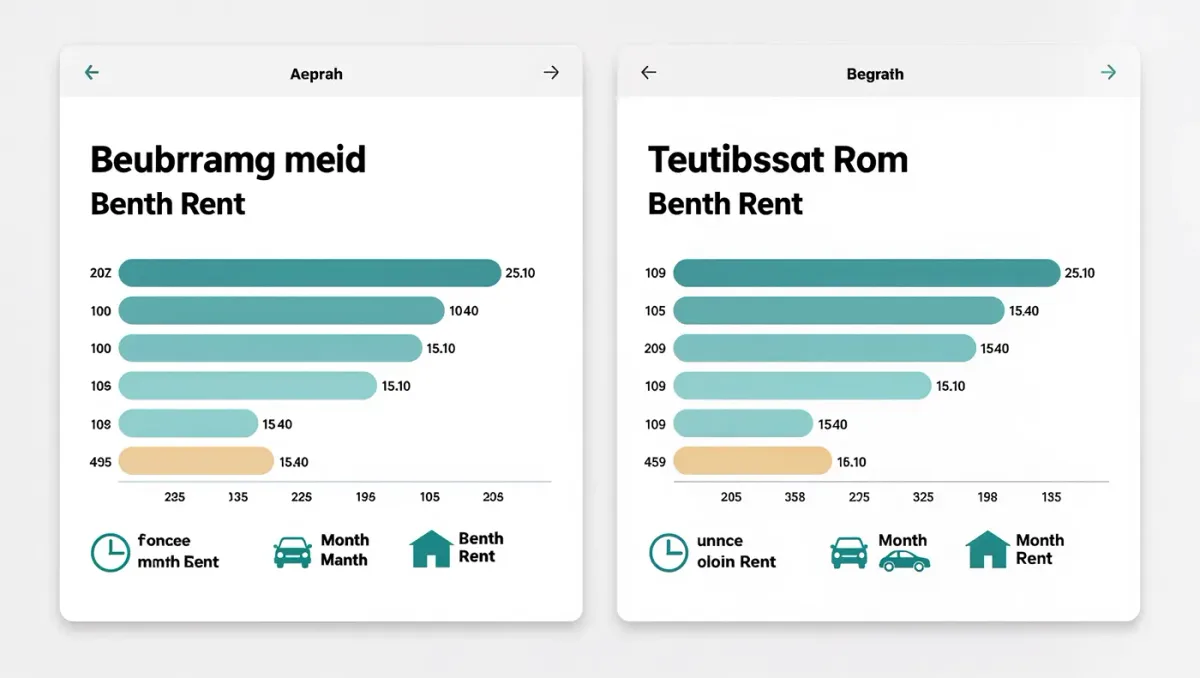
North Miami is cheaper across every unit type, and mostly by $300 to $600 a month, per Zillow's November 2025 neighborhood figures. The Shores' stock skews toward larger single-family homes and older apartment buildings on bigger lots, so its cheap units are scarcer; North Miami has more mid-century garden apartments and small complexes, which is where the lower one- and two-bedroom prices live.
| Criterion | Miami Shores | North Miami |
|---|---|---|
| 1-bedroom rent, Nov 2025 (per Zillow) | ~$2,000–$2,600 | ~$1,600–$2,100 |
| 2-bedroom rent | ~$2,800–$3,700 | ~$2,100–$2,900 |
| 3/2 house | ~$3,800–$5,500 | ~$2,900–$4,200 |
| Housing mix | Houses, older low-rises, larger lots | Garden apartments, small complexes, houses |
| Governance | Village of Miami Shores | City of North Miami |
| Drive to Downtown, normal traffic (2025 patterns) | ~20–30 min | ~25–35 min |
| Beach drive (Haulover via Biscayne Blvd) | ~15–20 min | ~10–15 min |
Read the table as ranges, not quotes. Condition, parking, and exact block move any individual listing by several hundred dollars; the durable fact is the relative gap between the two places, which held through 2025.
Who lives in each?
Census Bureau ACS 2023 five-year estimates show sharply different profiles. North Miami's population is majority Black, with one of the largest Haitian-American communities in the United States, and a median household income below the county median. Miami Shores skews whiter and older, with a median household income above the county median and high owner occupancy.
Day to day, that shows up in commercial streets rather than in statistics: Northeast 2nd Avenue in North Miami carries Haitian bakeries, markets, and restaurants alongside Caribbean grocery, while the Shores' retail clusters around 123rd Street and Biscayne lean toward services, gyms, and family dining. Both are real, established communities — the difference is price point and tenure, not amenity.
How do the commutes compare?
Both sit on the same I-95 and Biscayne Boulevard corridor, so commutes to Downtown, Brickell, the airport, and the beaches differ by five to ten minutes in North Miami's disfavor for most destinations, per typical 2025 Miami-Dade travel patterns. North Miami is closer to Haulover and Sunny Isles beaches; the Shores is closer to the Design District and Midtown.
Transit is the same story with a distance offset. Metrobus routes on 2nd Avenue, Biscayne Boulevard, and 125th Street connect both places to the Metrorail and to Downtown; the 125th Street corridor and the SE corridor buses are the workhorse routes. Neither neighborhood has rail. If you commute by car outside rush hours, the difference is minor; at 8:30 a.m. on I-95, it is not.
What about safety, schools, and services?
Crime data reviewed for 2025 from Miami-Dade and municipal sources shows higher incident rates in parts of North Miami than in Miami Shores, concentrated around specific commercial corridors — though both are broadly comparable to other older inner-ring suburbs, and block-level variation inside each is large. Ask to see any building at night, in both places.
Schools are assigned by address within Miami-Dade County Public Schools; both areas feed to neighborhood elementary schools, and the Shores' smaller villagewide district makes its assignment simpler to predict. Verify any address on the district locator. Parks: the Shores has its field-and-club complex near 96th Street; North Miami's parks system includes larger community facilities in its northeastern sections — both adequate for youth sports, different in upkeep, which you should judge in person.
Two practical notes on the rent gap. First, timing: the Shores' village-level rental supply is thin, so its best listings move in days, while North Miami's larger rental inventory gives you more room to negotiate and wait. Second, insurance: both sit inland enough to avoid the costliest coastal flood zones, but low-lying pockets near the Intracoastal-adjacent east edge of North Miami carry higher flood exposure, per FEMA mapping as of 2025 — ask any landlord how a flood-rate change would pass through to you.
Which one fits you?
- If your budget caps near $2,000 for a one-bedroom: North Miami, comfortably, with the trade of a longer commute and more variability block to block.
- If you rent a house and want mature streets, bigger lots, and a village government with its own police: Miami Shores, paying roughly $800 to $1,300 more monthly at the house level.
- If you commute to Downtown by transit daily: the Shores trims minutes; if you drive to the beach weekends, North Miami wins.
- If food matters most week to week: North Miami's Caribbean and Haitian commercial corridors are the stronger everyday-eats option.
Neither is the wrong answer; they are the same corridor priced $4,000 to $6,000 a year apart. Run your own commute, visit both at night, and let the November 2025 ranges above frame the negotiation.